


Cubist painting by Sigismund Kolos-Vary “Woman with Tulip”, 1936, sold
Nr. 2790 |
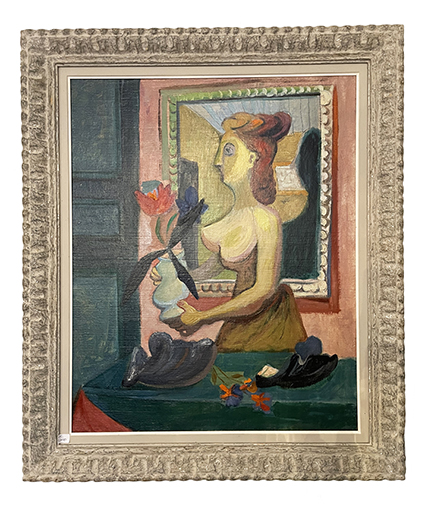

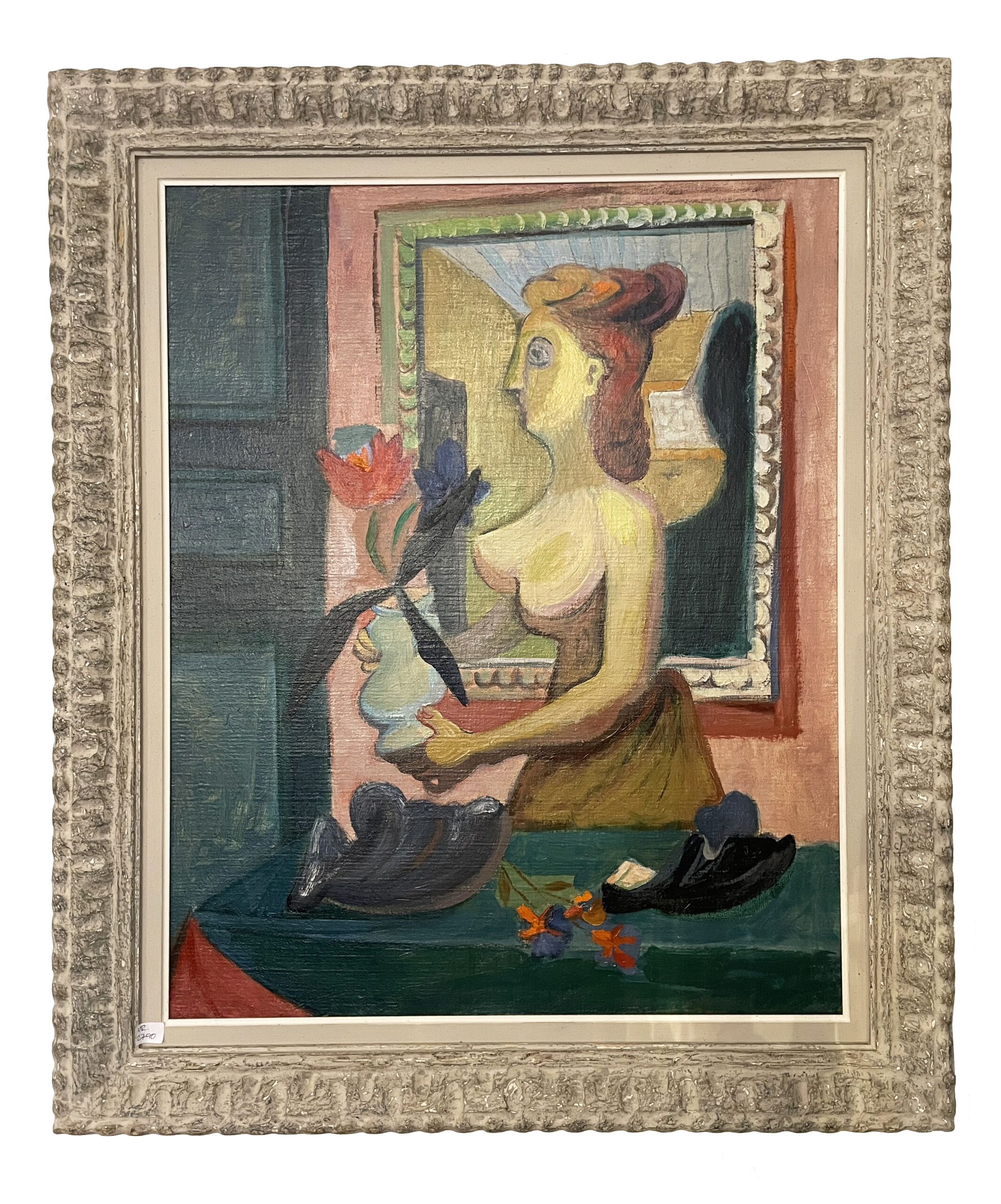
“Woman with Tulip”
Artist: Sigismund Kolos-Vary
born 1899 – died 1983
Oil on canvas
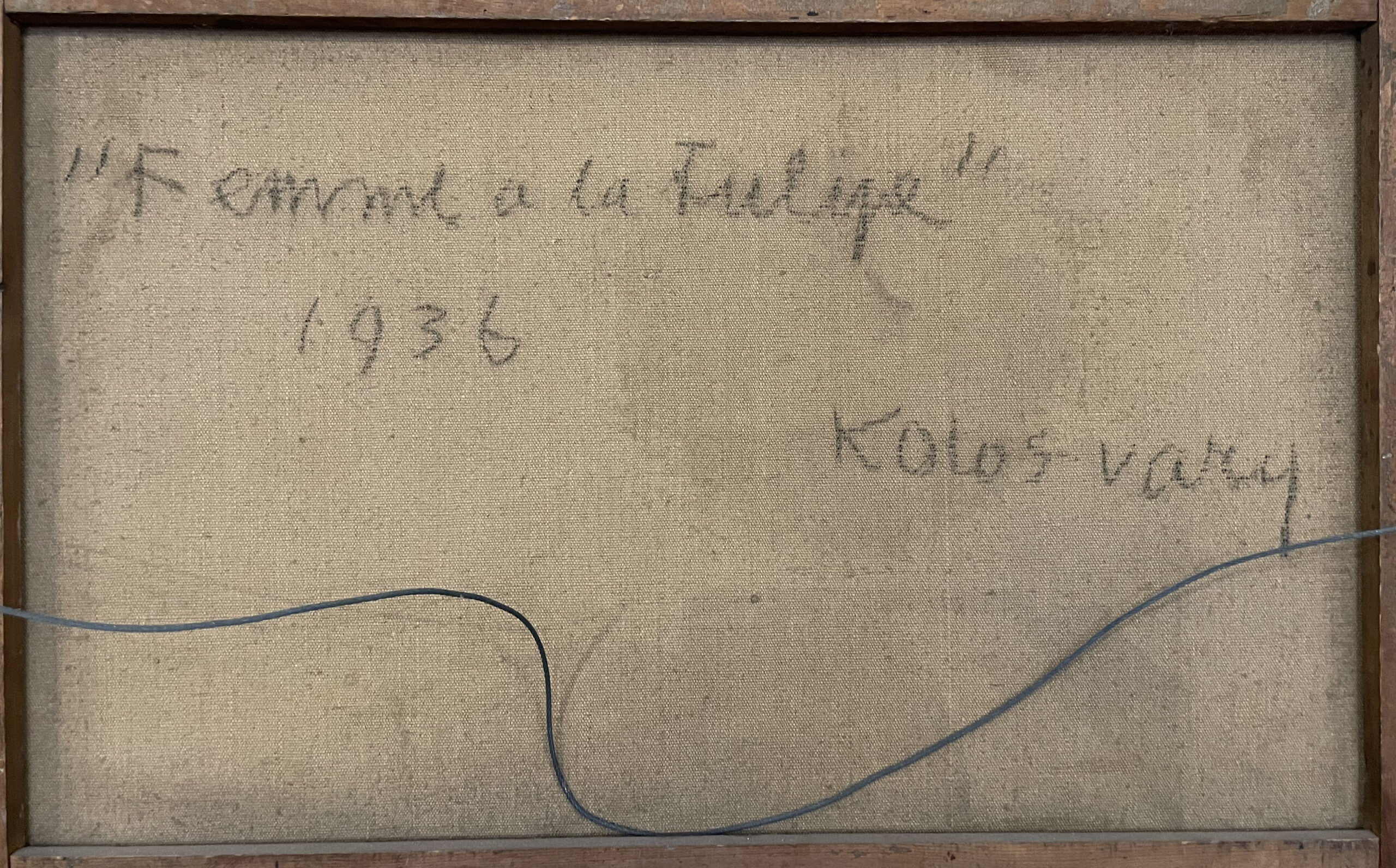
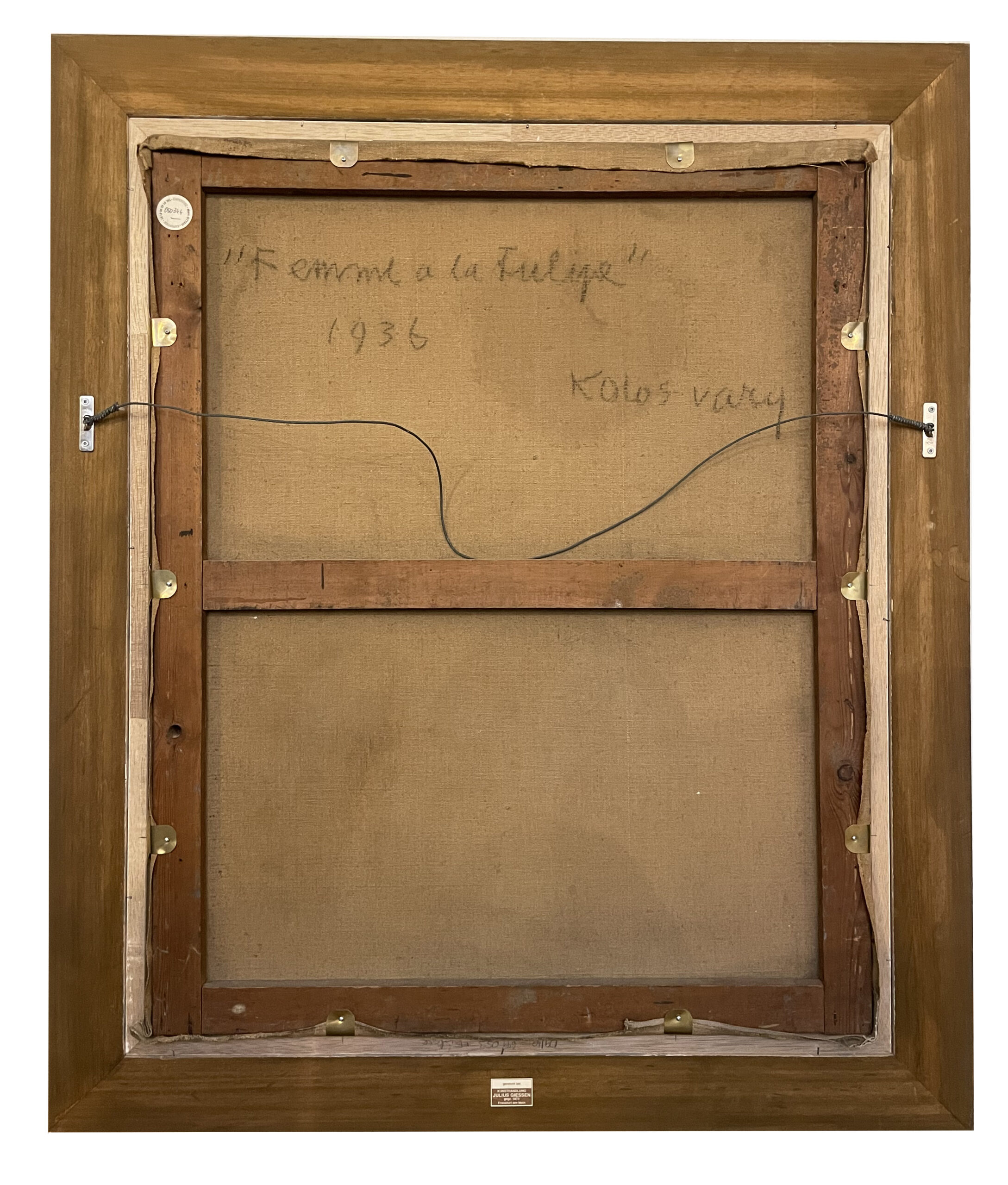
Signed, titled, and dated 1936
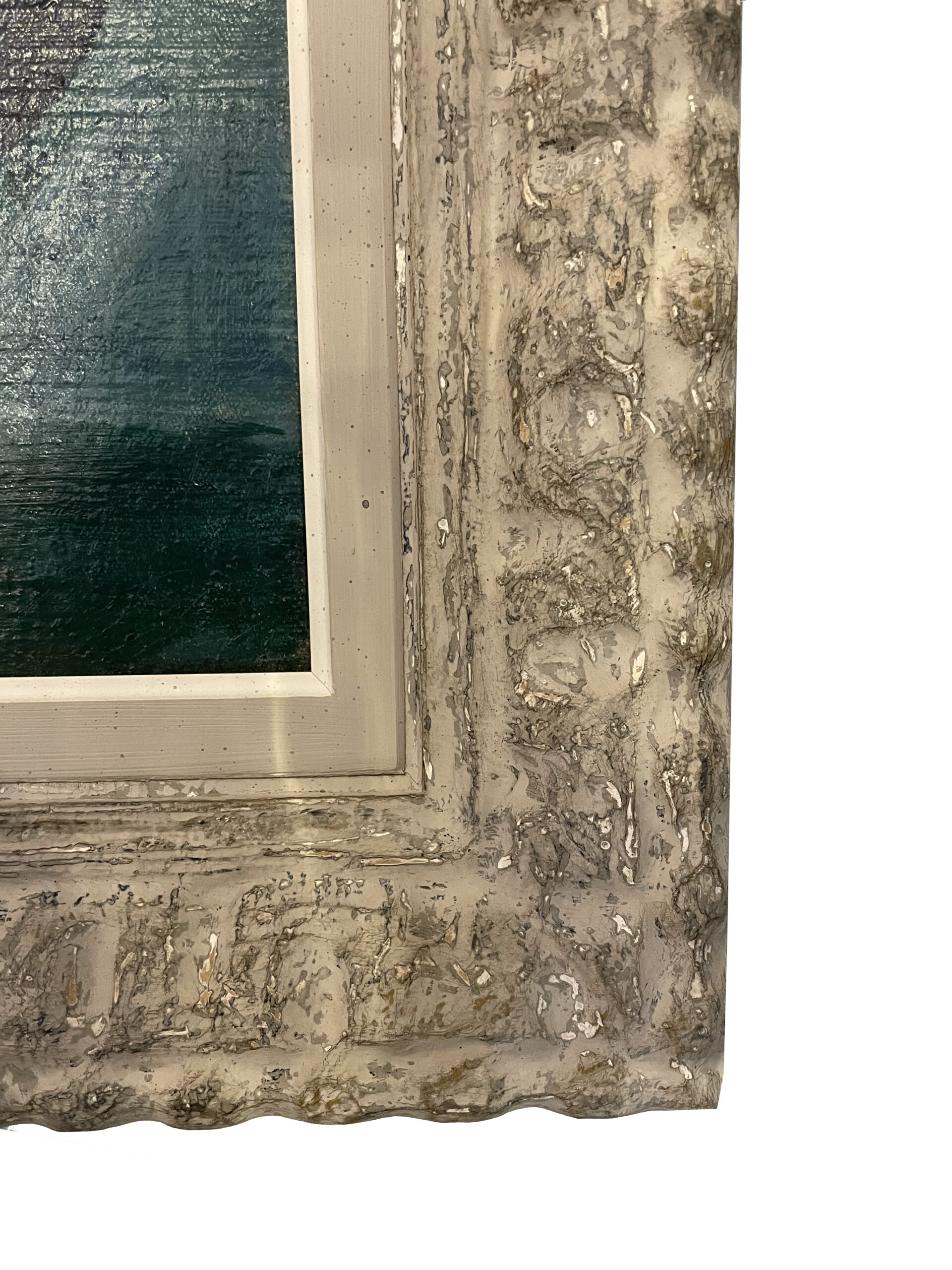
Height: 100 cm | Width: 84 cm (framed)
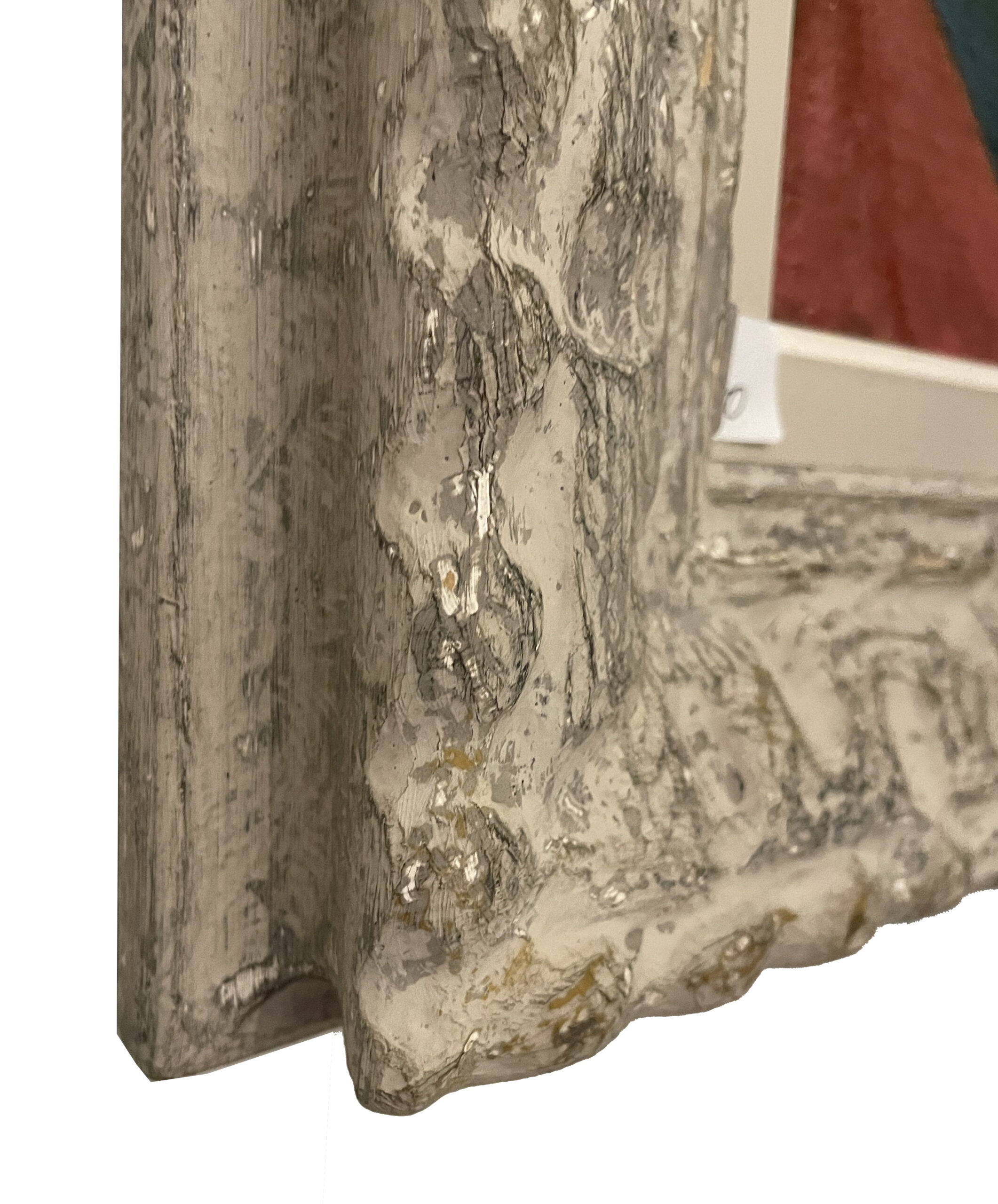
The painting technique is impasto and visibly textured, indicating a conscious engagement with materiality. Overall, the work combines figurative representation with formal abstraction and stylistically references influences from classical modernism, particularly Expressionism and Cubism.
Woman with Tulip
Sigismund Kolos-Vary (1899–1983) was a Hungarian-Austrian painter of the Classical Modern period.
After his academic training, he worked primarily in Central Europe. His oeuvre includes figure paintings, interiors, and still lifes, characterized by a reduced formal language, clear compositions, and a balanced, decorative palette.
In the 1930s, Kolos-Vary developed a distinctive style that blends modern objectivity with poetic stylization.
His works are primarily situated within the art historical context of the interwar period.
Image description:
Woman with Tulip
Oil on canvas
The stylized figure composition combines elements of still life with a modern, flat conception of space. Color rhythms and simplified forms allude to influences of Classical Modernism and lend the work a timeless, collector’s appeal.
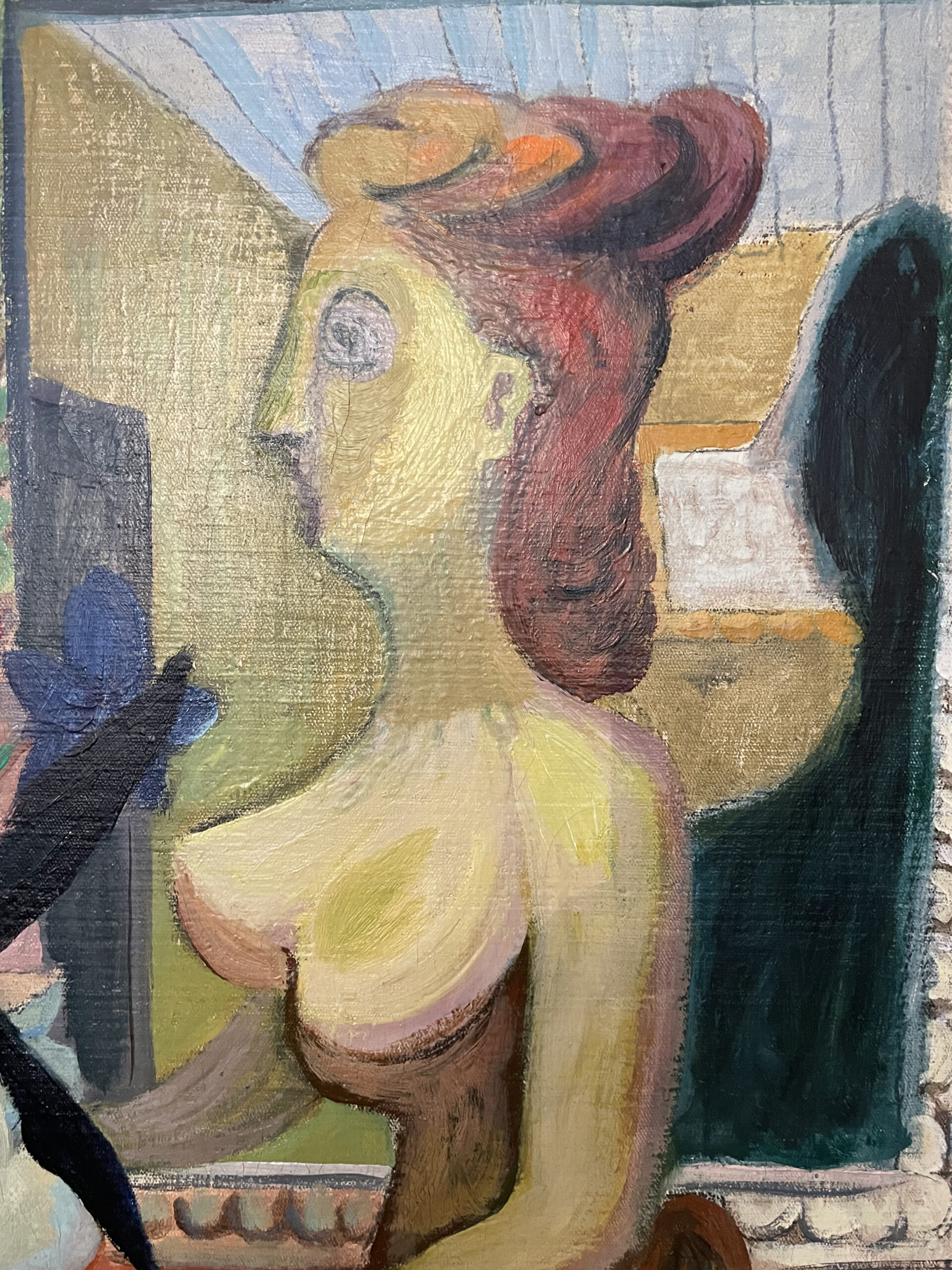
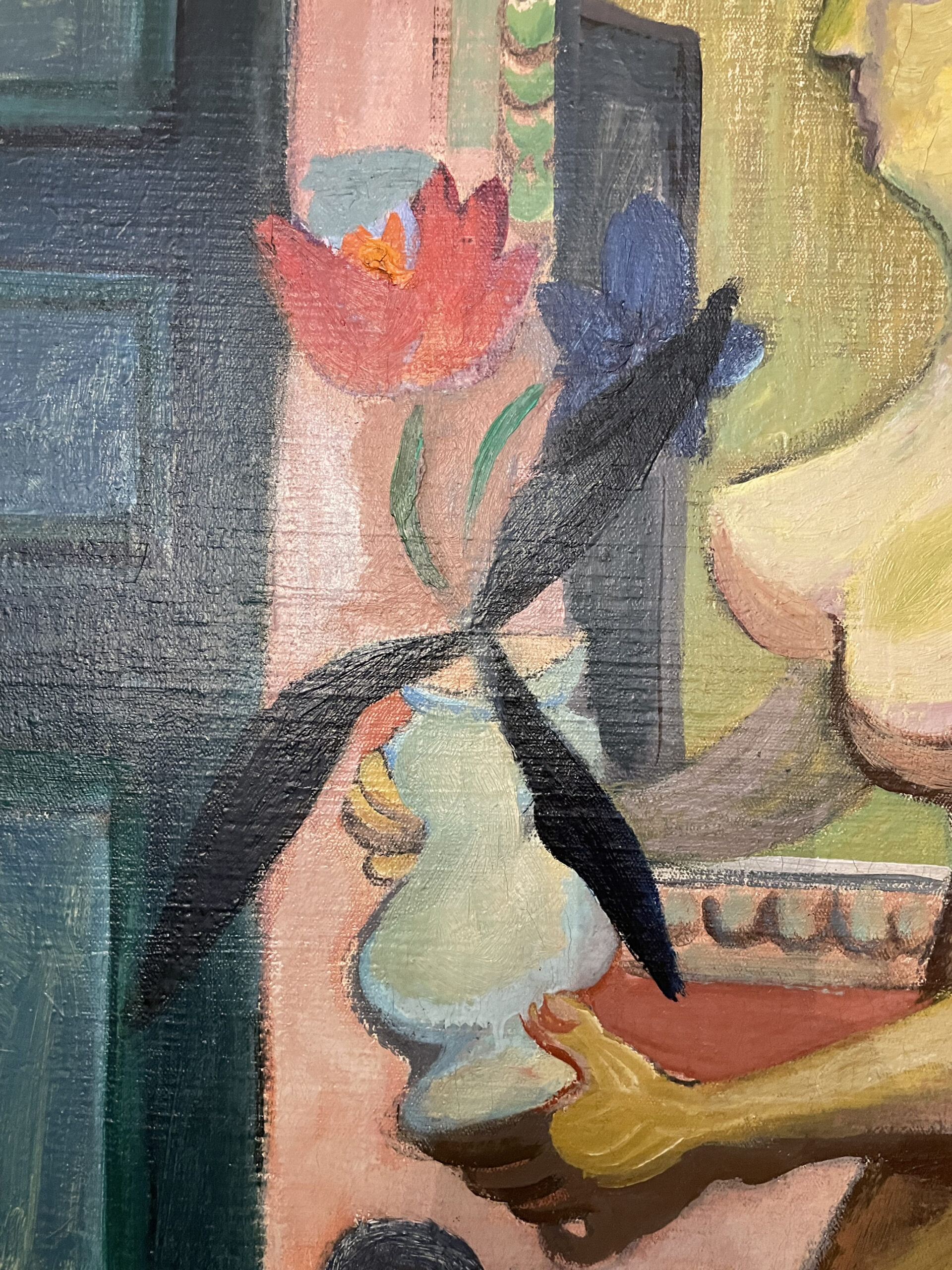
The painting depicts a stylized female half-figure in profile, set in an interior space in front of a window or mural. The figure is geometrically simplified and composed of flat planes; the head, torso, and limbs are clearly contoured and deliberately distorted in perspective. The figure holds a vase containing a tulip, the bloom accentuated by a dark, diagonal shape.
The color palette is muted and harmonious, dominated by shades of green, blue, ochre, and pink. The depiction of space is achieved without linear perspective, instead relying on superimposed color fields and framing to create picture-within-a-picture structures. Still-life elements (shoes, fabric, flowers) are arranged in the foreground, reinforcing the static nature of the scene.
The painting technique is impasto and visibly textured, indicating a conscious engagement with materiality. Overall, the work combines figurative representation with formal abstraction and stylistically references influences from classical modernism, particularly Expressionism and Cubism.
Another Painting of this Periode is Still life by Nicolas Poliakoff.
Art Déco bei RSA Wiesbaden
You can find more Art Deco cabinets, Art Deco chests of drawers and Art Deco lamps in my shop in Wiesbaden. Regine Schmitz-Avila – your specialist for French Art Deco furniture and art objects from around 1930.
