


Art Deco Armchairs – Original French Seating
Original Art Deco armchairs combine exceptional comfort with the elegant and sophisticated design language of the 1920s and 1930s. Sculptural silhouettes, harmonious proportions, fine woods and luxurious upholstery give these pieces their distinctive presence.
At RSA Antiquitäten Wiesbaden, you will find carefully selected original French Art Deco armchairs – from elegant individual armchairs and matching pairs to upholstered bergères, club chairs and distinctive swivel chairs. Each piece is selected with particular attention to authenticity, design quality, craftsmanship and condition.


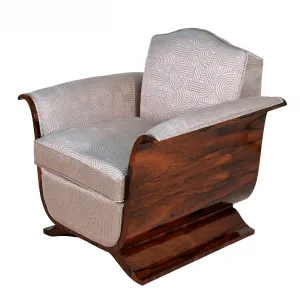


French Art Deco Armchairs from the 1920s and 1930s
The armchair occupied a special position within French Art Deco interiors. It was not merely conceived as comfortable seating, but as an important element of the overall architectural and decorative composition of a room.
The great Paris Exposition Internationale des Arts Décoratifs et Industriels Modernes of 1925 marked a defining moment for French Art Deco. Leading designers and ébénistes such as Émile-Jacques Ruhlmann, Louis Süe, André Mare and Jules Leleu combined the traditions of French cabinetmaking with a new and distinctly modern sense of luxury.
Their furniture was characterised by refined proportions, carefully selected materials and exceptional craftsmanship. In armchairs in particular, this aesthetic could be expressed through the relationship between sculptural wooden frames, upholstery, armrests and elegantly shaped backrests.
Comfort Combined with Sculptural Design
A fine Art Deco armchair must achieve a balance between visual elegance and comfort.
Unlike a dining chair, an armchair offers designers greater freedom to create generous proportions, pronounced curves, upholstered armrests and sculptural silhouettes. Some models appear light and architectural, while others have a more substantial and luxurious presence.
Curved armrests, rounded backs and enveloping forms are characteristic of many French designs of the period. The finest examples create a harmonious transition between seat, backrest and arms, giving the furniture an almost sculptural appearance.
Fine Woods, Lacquer and Luxurious Upholstery
French Art Deco furniture is renowned for the sophisticated use of high-quality materials.
Armchair frames were made from or veneered with woods such as Macassar ebony, rosewood, mahogany and walnut. Dark polished woods and black lacquered surfaces could be combined with light upholstery to create striking contrasts.
Leather, velvet and fine upholstery fabrics give Art Deco armchairs their characteristic sense of luxury and comfort.
The interaction between the wooden frame and upholstery is particularly important. In a well-designed armchair, the fabric or leather does not merely cover the seat; it becomes an integral part of the overall composition.
Art Deco Bergères – French Elegance and Comfort
The bergère has its origins in the tradition of French upholstered seating and was reinterpreted during the Art Deco period in a more modern design language.
Art Deco bergères often combine generous upholstered seats with elegant wooden frames, enclosed sides and harmonious proportions. Their form reflects both the long tradition of French furniture making and the desire for a new, sophisticated modernity.
Pairs of original Art Deco bergères can be particularly impressive in a sophisticated interior, where they create symmetry while retaining the individuality of historic furniture.
Art Deco Club Chairs – Comfort and Architectural Presence
The Art Deco club chair represents another important type of upholstered seating from the period.
With its deeper seat, generous upholstery and frequently rounded or architectural silhouette, the club chair places particular emphasis on comfort while retaining the clear elegance associated with Art Deco.
Large French Art Deco armchairs and club chairs can therefore have an almost architectural presence within a room. They are especially effective when used as individual statement pieces or as a matching pair.
Pairs of Art Deco Armchairs
Matching pairs of original Art Deco armchairs are particularly attractive for interior design.
Two historically corresponding armchairs create balance and symmetry and can be positioned opposite a sofa, beside a fireplace or as part of a sophisticated seating arrangement.
As complete pairs have often been separated over the decades, well-preserved matching examples are particularly desirable.
Their versatility also makes them ideal for combining historic furniture with contemporary architecture, modern art and minimalist interiors.
Ruhlmann and the French Tradition of Luxury
Émile-Jacques Ruhlmann is one of the most important representatives of luxurious French Art Deco furniture.
His work demonstrates how traditional French cabinetmaking could be translated into a modern aesthetic through refined proportions, architectural clarity, rare materials and exceptional craftsmanship.
Ruhlmann’s influence extended far beyond his own workshop. The elegance and sophistication associated with his furniture became representative of the highest level of French Art Deco design during the 1920s.
Other important designers, including Süe et Mare and Jules Leleu, likewise contributed to an era in which furniture was conceived as an essential element of sophisticated interior architecture.
Restoration and Upholstery
The quality of a historic armchair is determined not only by its visible surface but also by its construction and upholstery.
When an Art Deco armchair requires restoration, particular care should be taken to preserve its historical character, proportions and original design.
Professionally renewed upholstery can restore comfort while respecting the character of the piece. Carefully selected leather or high-quality fabric can emphasise the sculptural qualities of the frame and provide an elegant contrast to polished or lacquered wood.
A sensitive restoration should enhance the original qualities of the furniture rather than conceal its history.
Art Deco Armchairs in Contemporary Interiors
Original Art Deco armchairs work remarkably well in modern interiors.
Their sculptural forms and sophisticated materials create a striking contrast with contemporary architecture, modern paintings and restrained interior design.
A single exceptional armchair can function almost like a piece of sculpture, while a matching pair introduces symmetry and architectural balance.
This ability to combine historical character with contemporary interiors is one of the reasons why high-quality French Art Deco seating remains so appealing today.
Original Art Deco Armchairs at RSA Antiquitäten Wiesbaden
RSA Antiquitäten Wiesbaden specialises in original French Art Deco furniture from the 1920s and 1930s.
Our selection of Art Deco armchairs includes elegant individual pieces, matching pairs, bergères, club chairs and other exceptional upholstered seating.
When selecting our furniture, we pay particular attention to authenticity, quality, proportions, craftsmanship, materials and condition.
We advise private collectors as well as interior architects and interior designers in selecting suitable pieces for sophisticated interiors.
Insured delivery within Germany and internationally can be arranged upon request.
Frequently Asked Questions about Art Deco Armchairs
How can you recognise a high-quality Art Deco armchair?
Important criteria include age, provenance, construction, proportions, quality of the wood, craftsmanship and upholstery. Fine examples combine a carefully designed frame with upholstery that forms an integral part of the overall composition.
Which materials are typical of Art Deco armchairs?
Typical materials include Macassar ebony, rosewood, mahogany and walnut, as well as polished or lacquered wooden surfaces. Upholstery may include leather, velvet and other high-quality fabrics.
What is the difference between an Art Deco chair and an Art Deco armchair?
An armchair has armrests and usually provides more generous upholstered seating. Art Deco dining chairs are generally more compact and are primarily intended for use around a dining table. Keeping these furniture types separate also makes it easier to create clearly defined collections.
What is an Art Deco bergère?
A bergère is an upholstered armchair derived from the French furniture tradition. Art Deco designers reinterpreted this historic furniture type with cleaner lines, refined proportions and a more modern aesthetic.
Can Art Deco armchairs be combined with modern furniture?
Yes. Their sculptural forms and fine materials make original Art Deco armchairs particularly suitable for contemporary interiors. A single armchair or matching pair can create a strong contrast with modern furniture and architecture.
Does RSA Antiquitäten deliver Art Deco armchairs internationally?
Yes. Insured delivery within Germany and internationally can be arranged through experienced furniture and art transport companies.
