


Two Art Deco lions, France circa 1930
Nr. 2811 | 3..800,--Euro

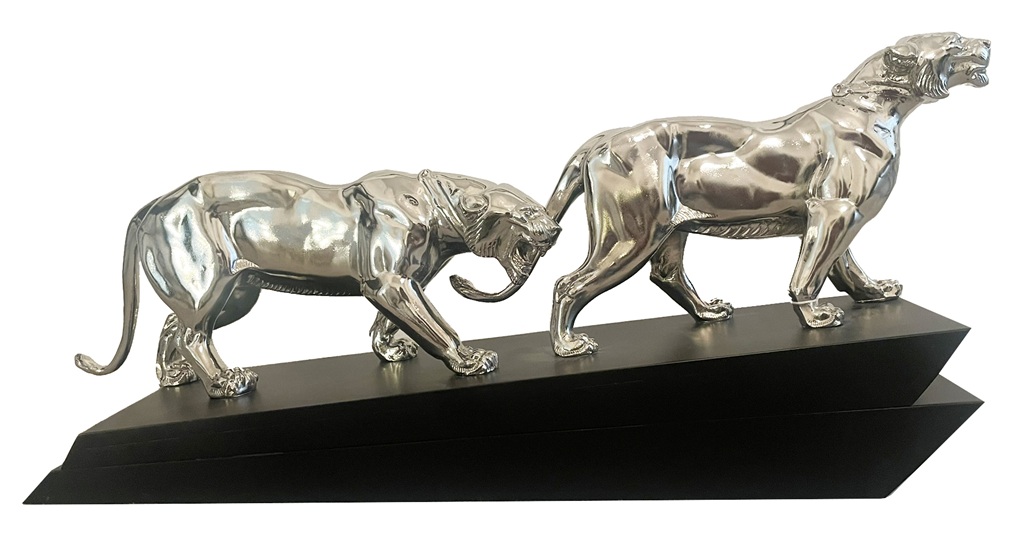
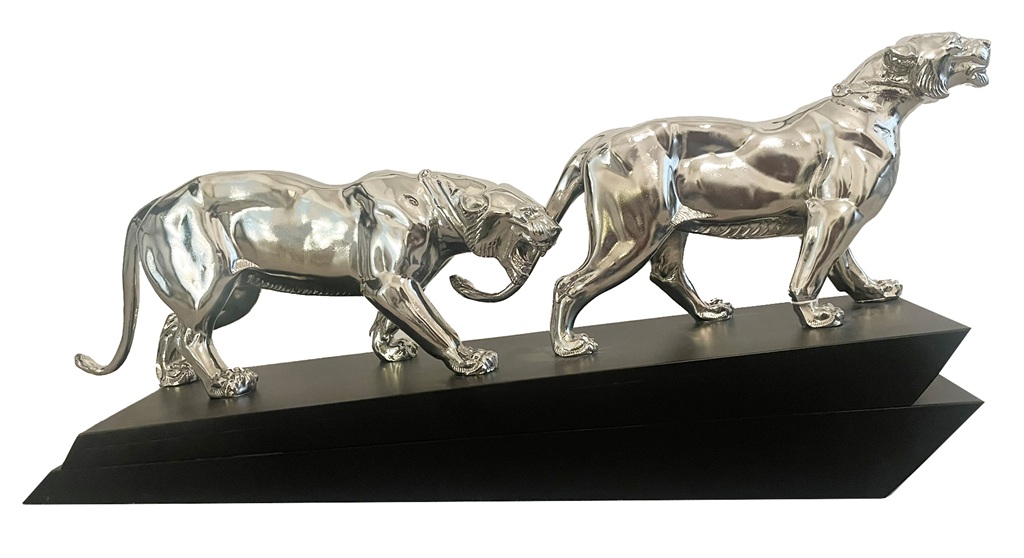
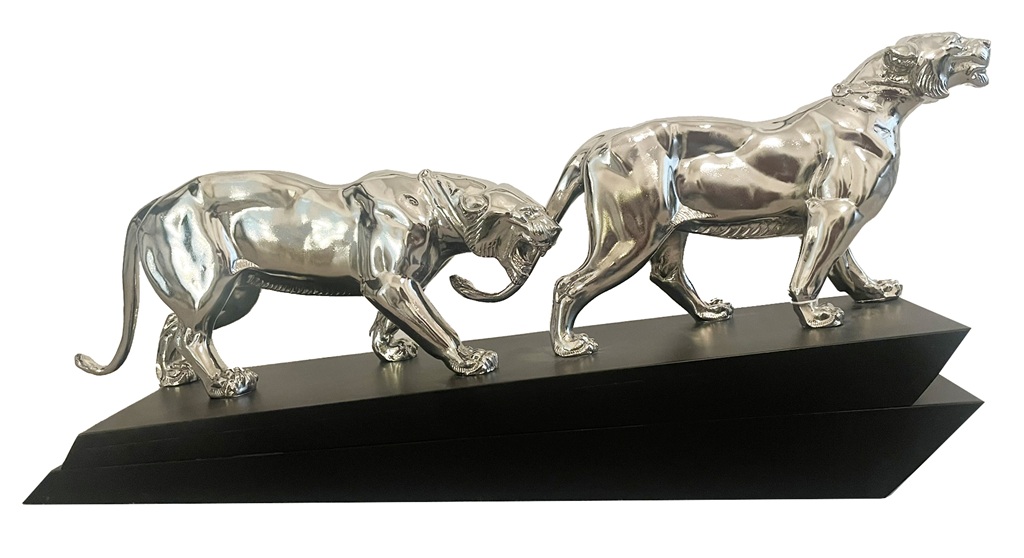
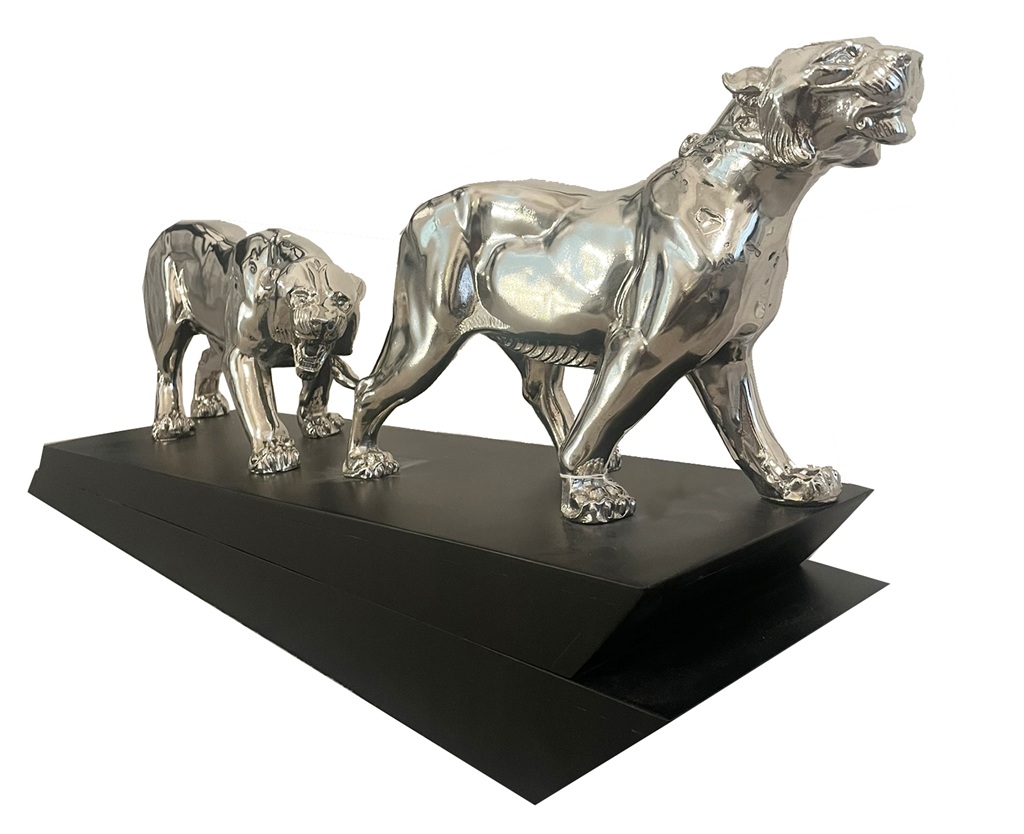
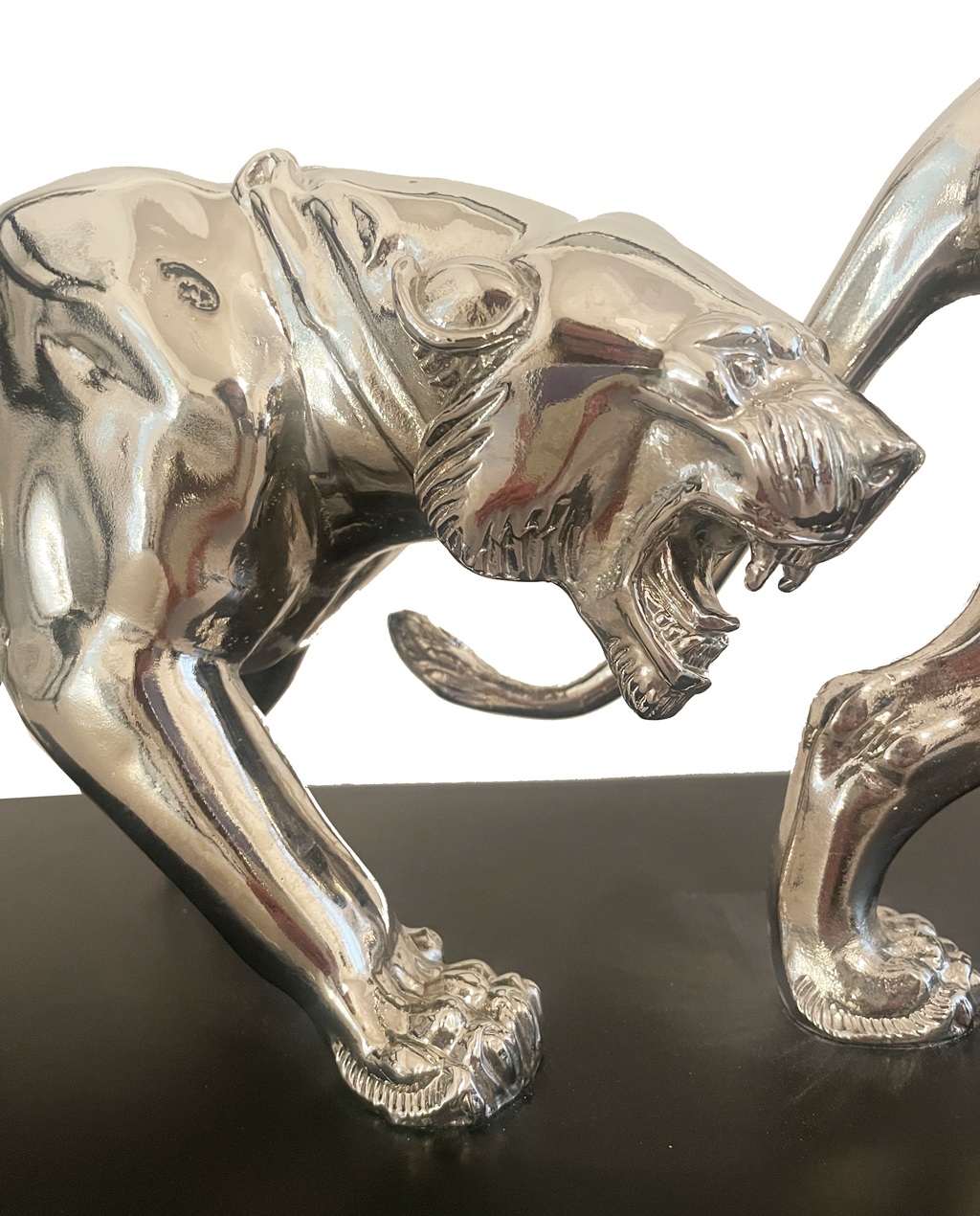
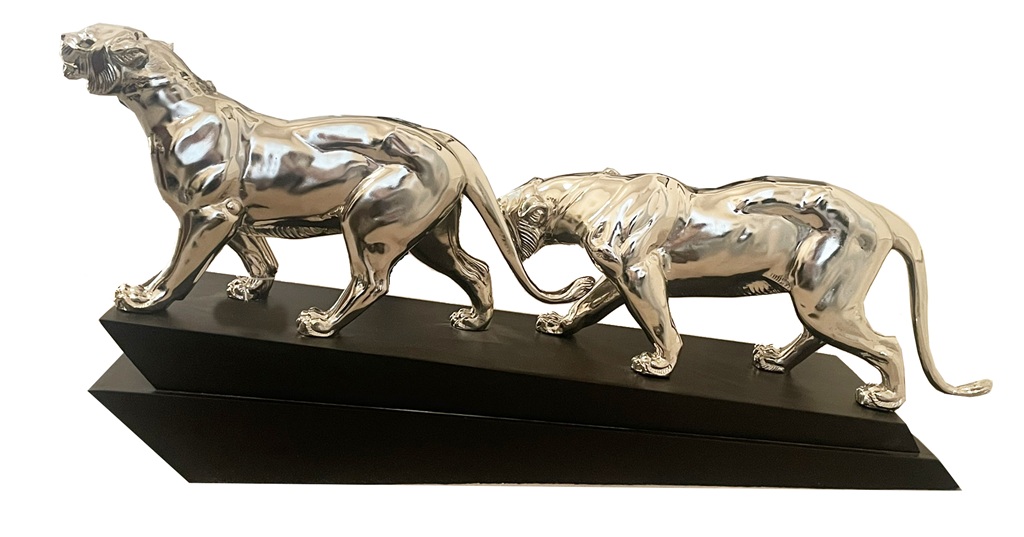
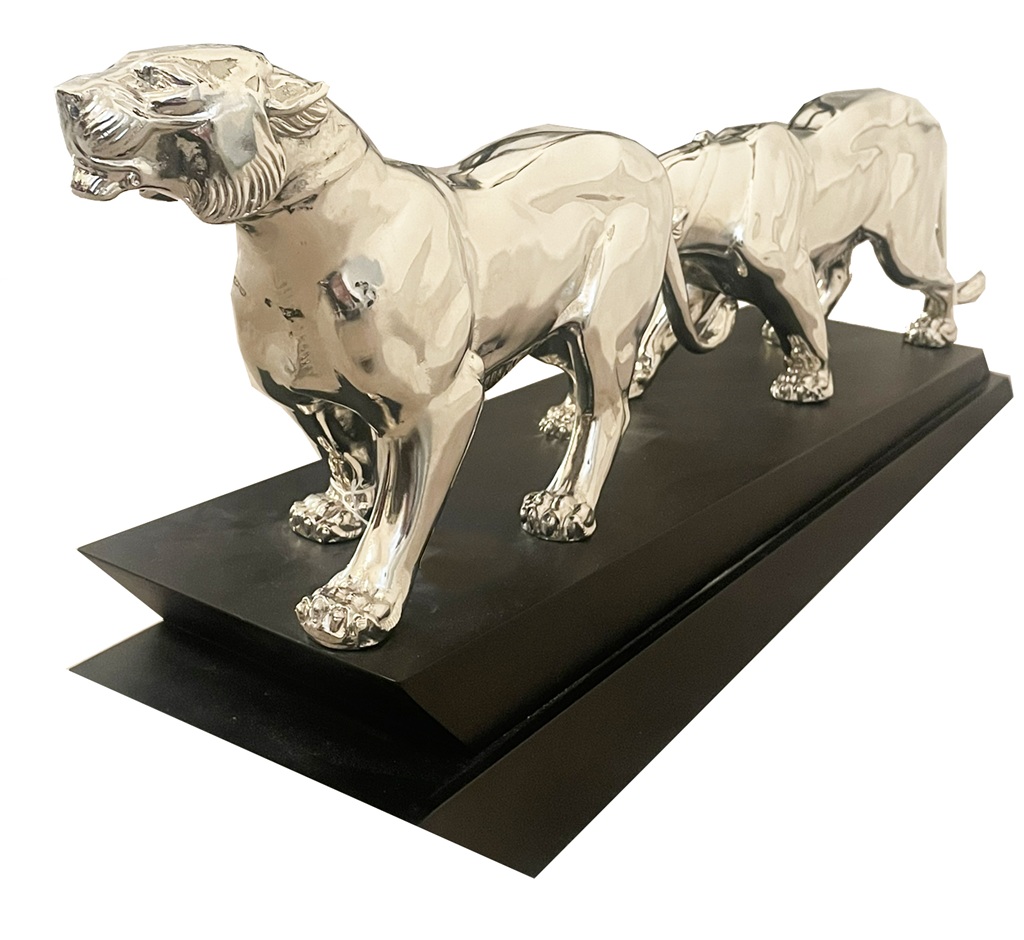
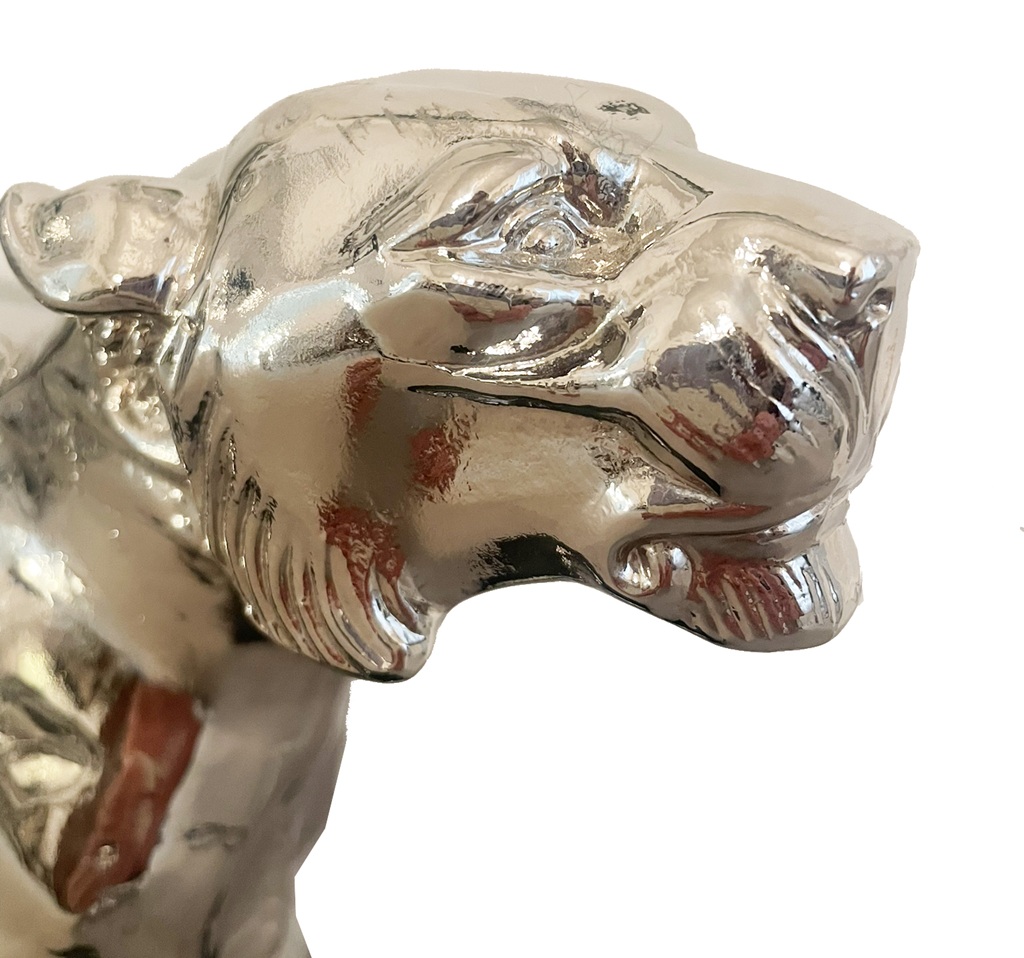
Pair of snarling lions
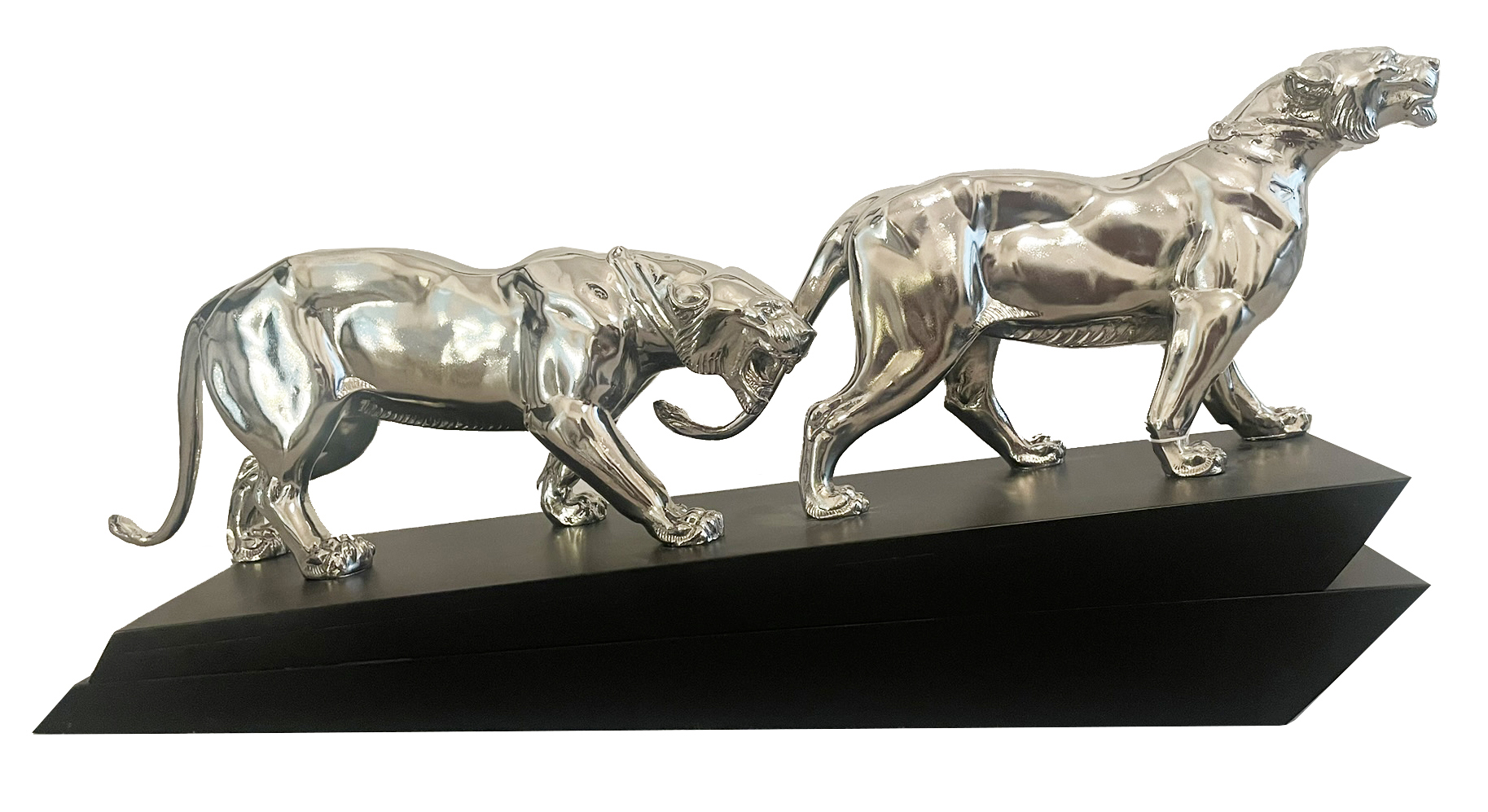
France, circa 1925.
Art Deco.
White bronze, nickel-plated, mounted on a black granite base.
Height: 40 cm | Width: 80 cm | Depth: 20 cm
Pair of Art Deco Lions
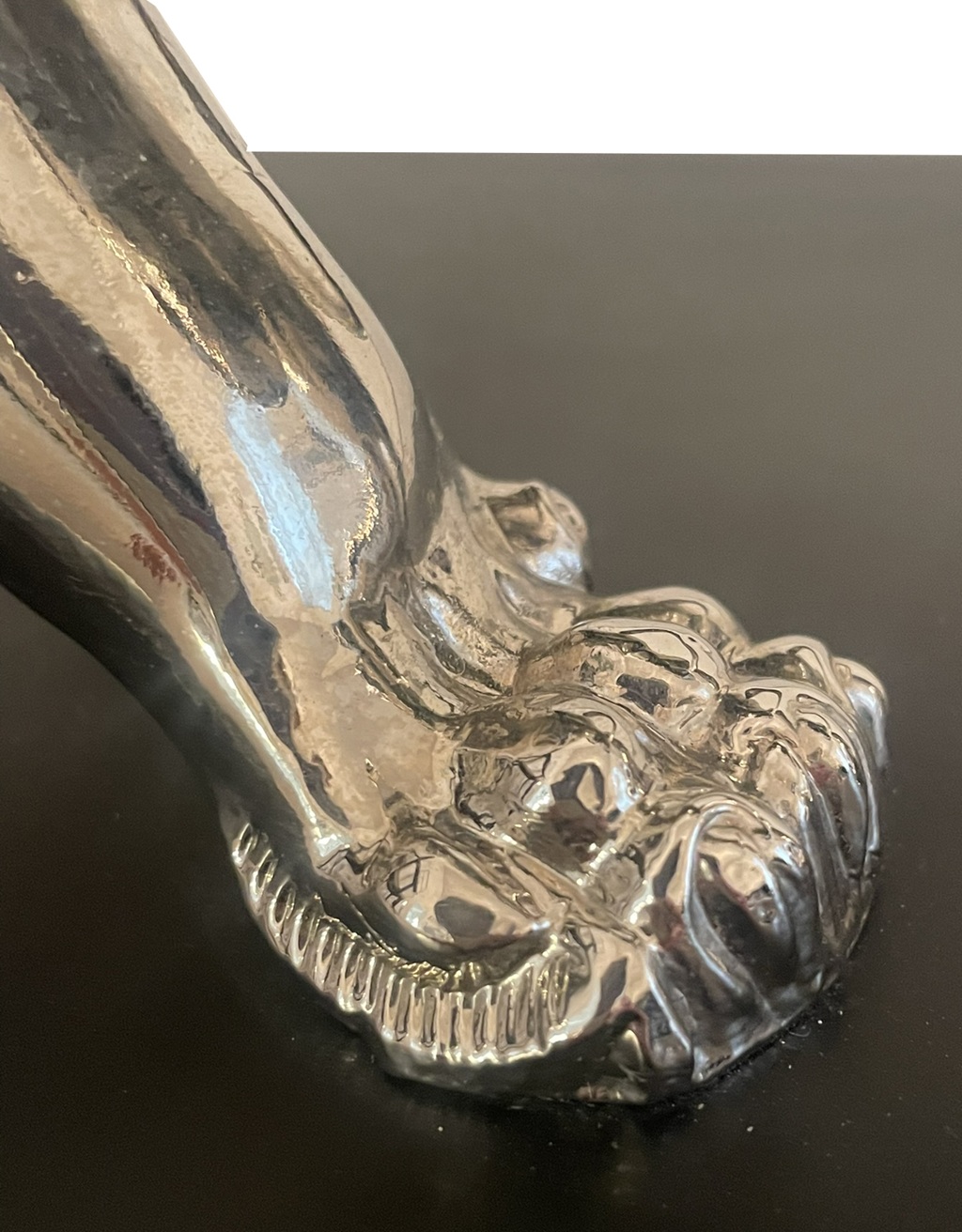
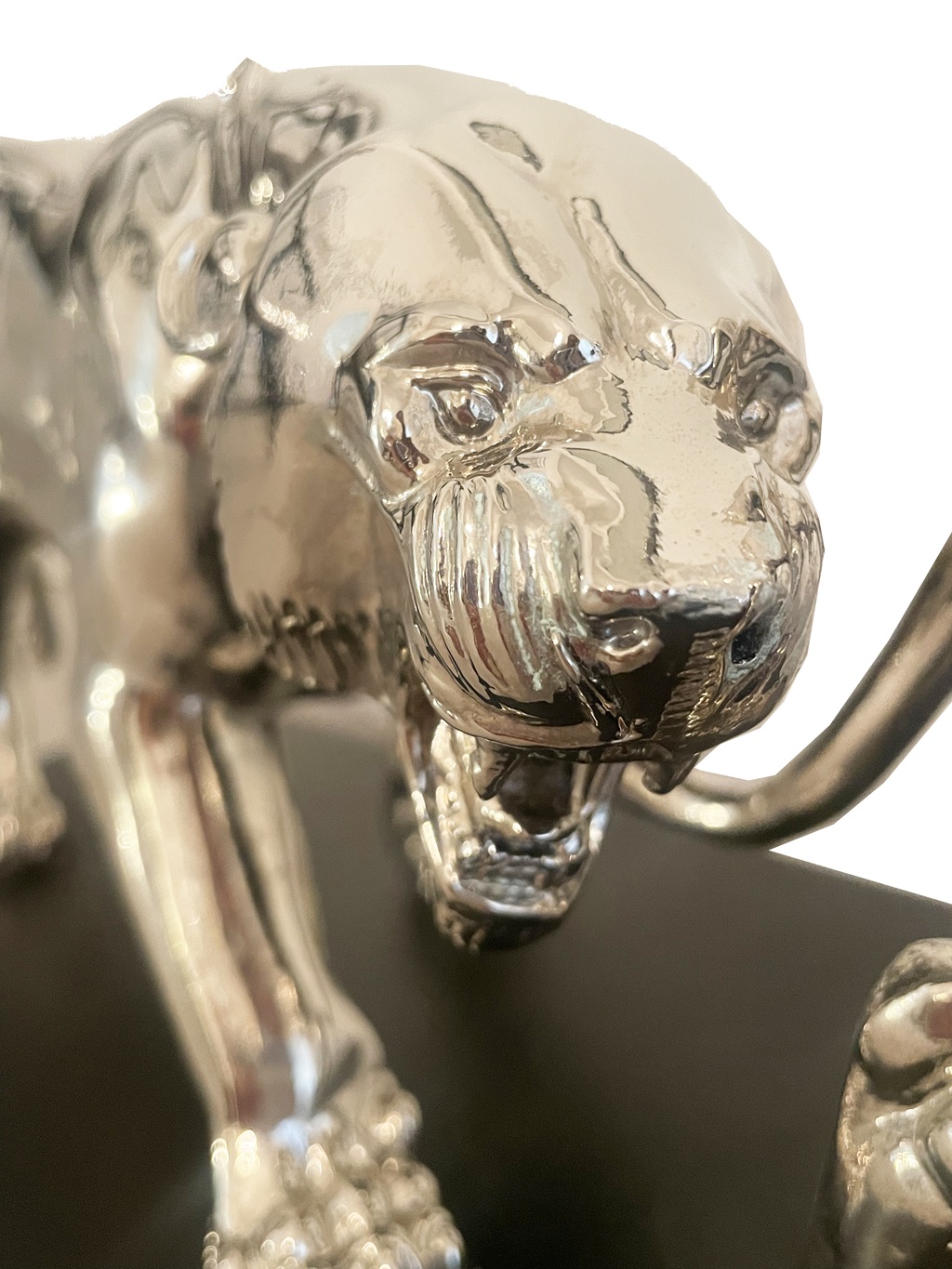
The sculpture of a pair of snarling lions embodies the powerful dynamism and majestic presence of these animals. It is masterfully crafted in the Art Deco style of late 1920s France. Made of white bronze, the figures gleam with a silvery sheen thanks to their nickel plating. This highlights the delicate details of the muscular structure and expressive faces. The dark, polished granite base forms a striking contrast to the light bronze.
This combination lends the work both stability and an elegant visual impact. The composition captures the moment of the snarl, conveying both tension and a protective instinct. It also reflects the artistic trend of the era to idealize the fusion of nature and style. Such works were an expression of the social ascent and technological progress of that time.
Design and Modeling
Artists designed flowing forms, utilizing clay or wax. For example, they elegantly emphasized muscles. At the same time, they created geometric poses. That’s why the sculptures appeared modern. They also captured power.
Molding
They made negative molds from models. Silicone or plaster helped with this. They also ensured precise details. Furthermore, the molds enabled reproduction. Thus, fidelity to the original was preserved.
Lost-wax casting
The lost-wax casting process was standard. It produced fine structures. First, wax was embedded. Then the mold was heated. This caused the wax to melt. Bronze was then poured into it.
Bronze casting
Molten bronze filled the mold. It also cooled quickly. At the same time, it hardened. Therefore, it retained all the details. It was then polished. This is how the panther finally shone.
Panthers are our passion, like these two panthers on marble. We also have several others signed, such as the large Art Deco panther.
Another special piece is this Art Deco illuminated sculpture, “Springbok/Antelope.”
Art Deco at RSA Wiesbaden
You can find more Art Deco cabinets, Art Deco chests of drawers and Art Deco lamps in my shop in Wiesbaden. Regine Schmitz-Avila – your specialist for French Art Deco furniture and art objects from around 1930.
