


Art Deco Lion Vase by Pierre d’Avesn
Nr. 2839 | 3.300,--Euro
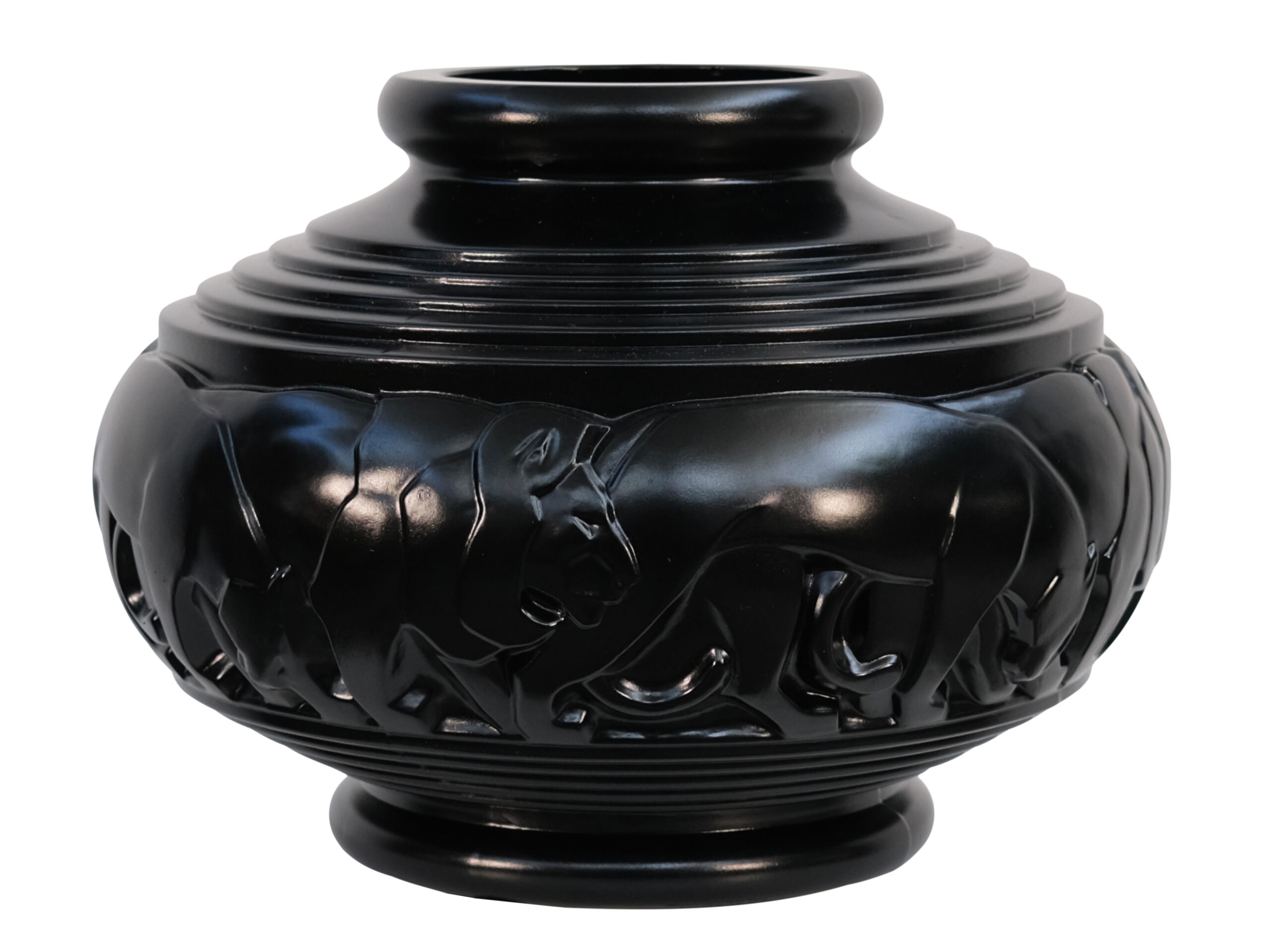
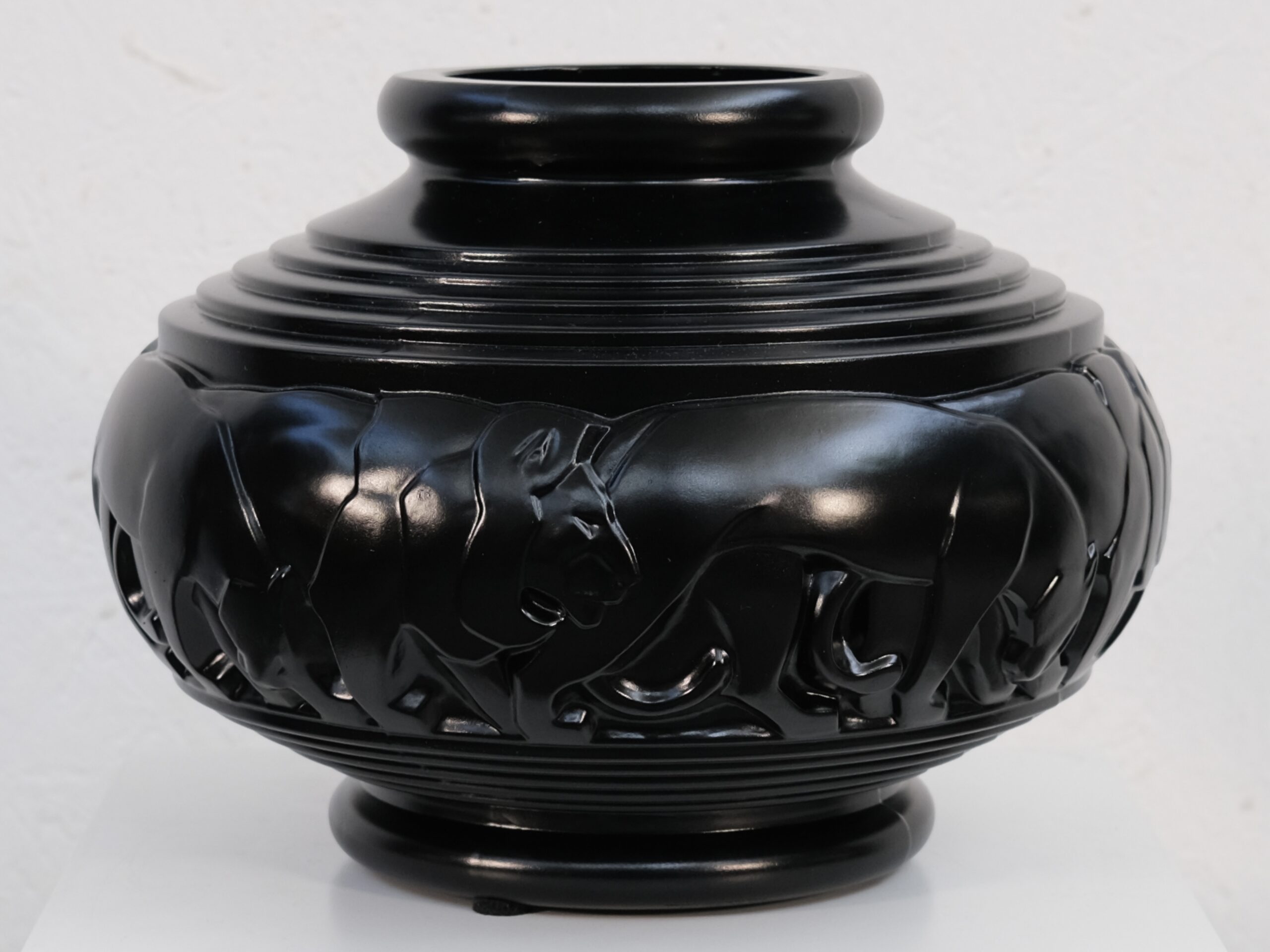
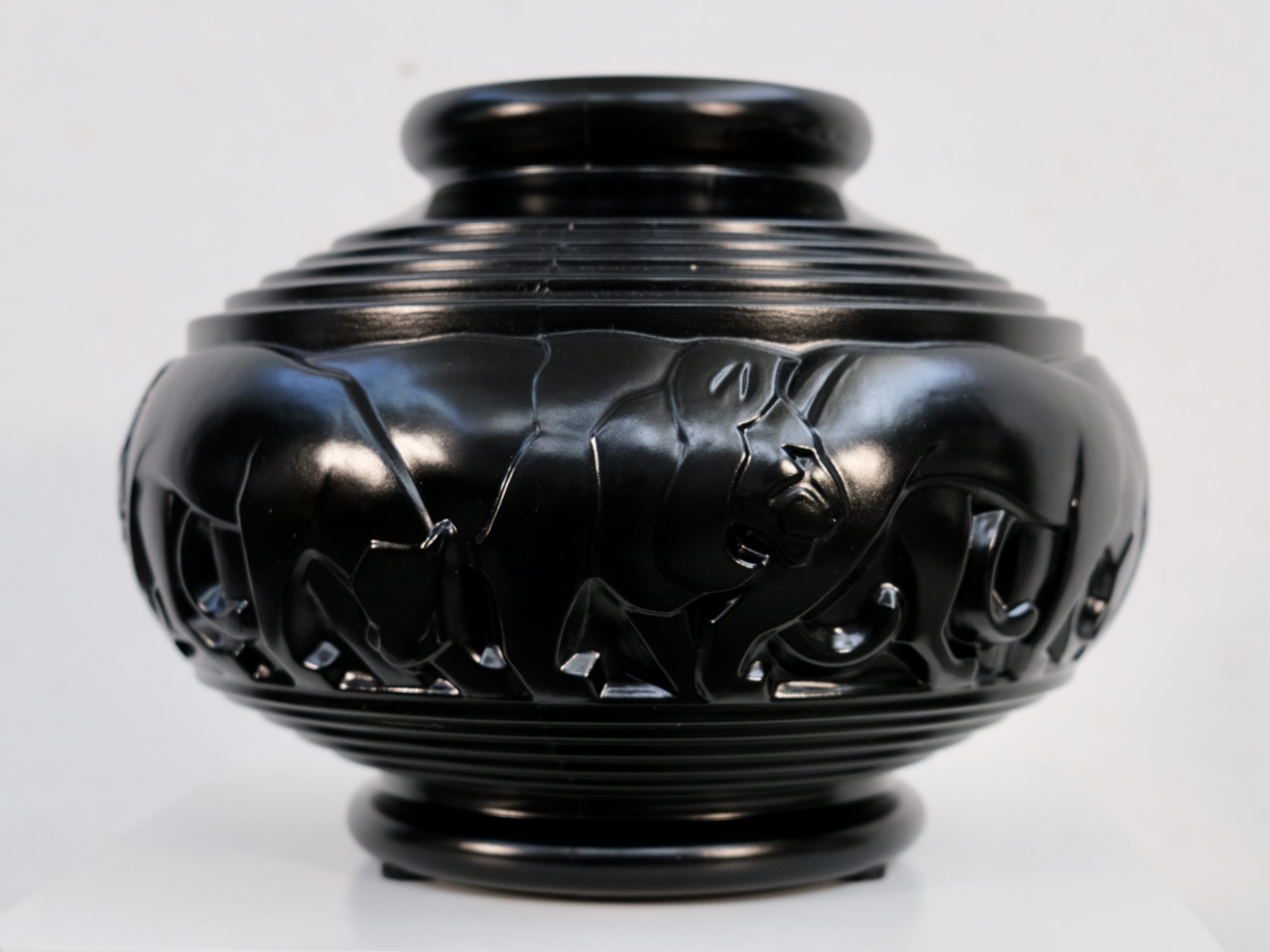

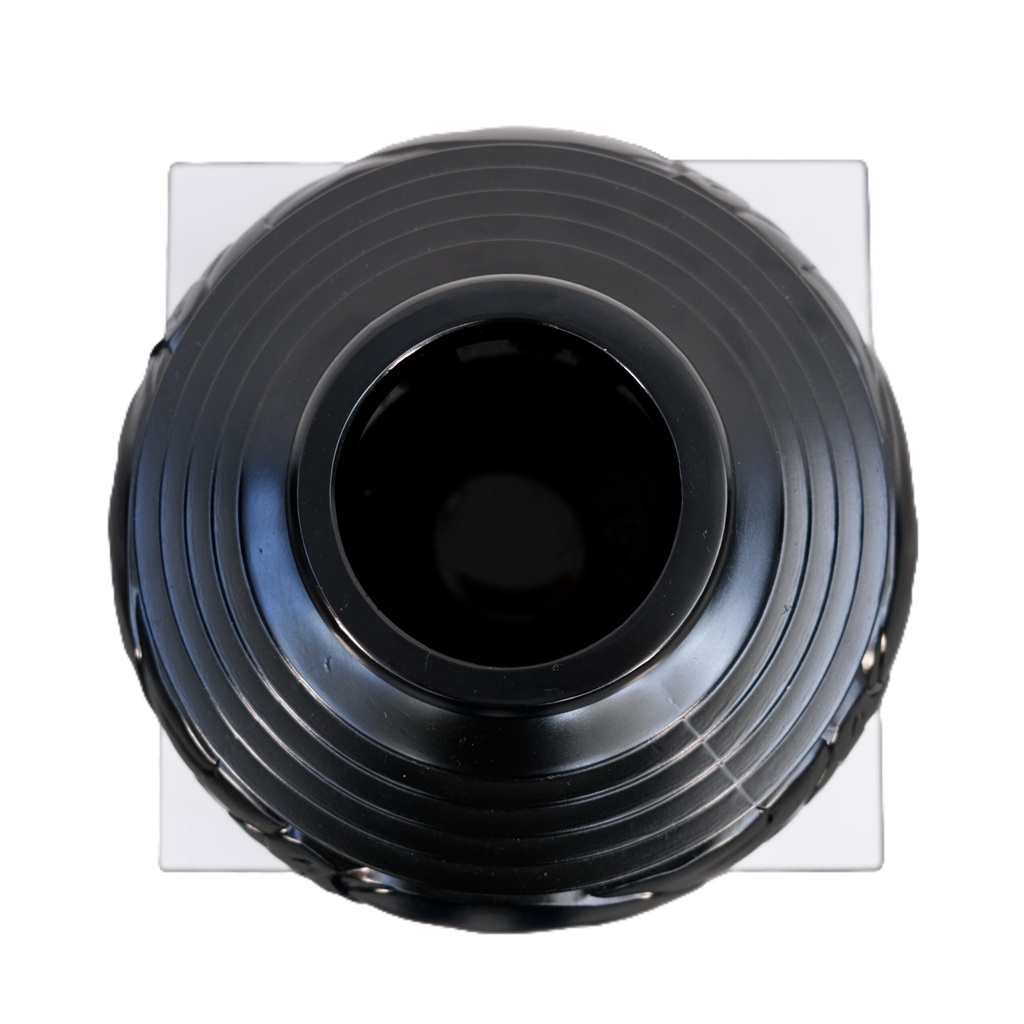
Pierre d’Avesn Vase – Circular Foot
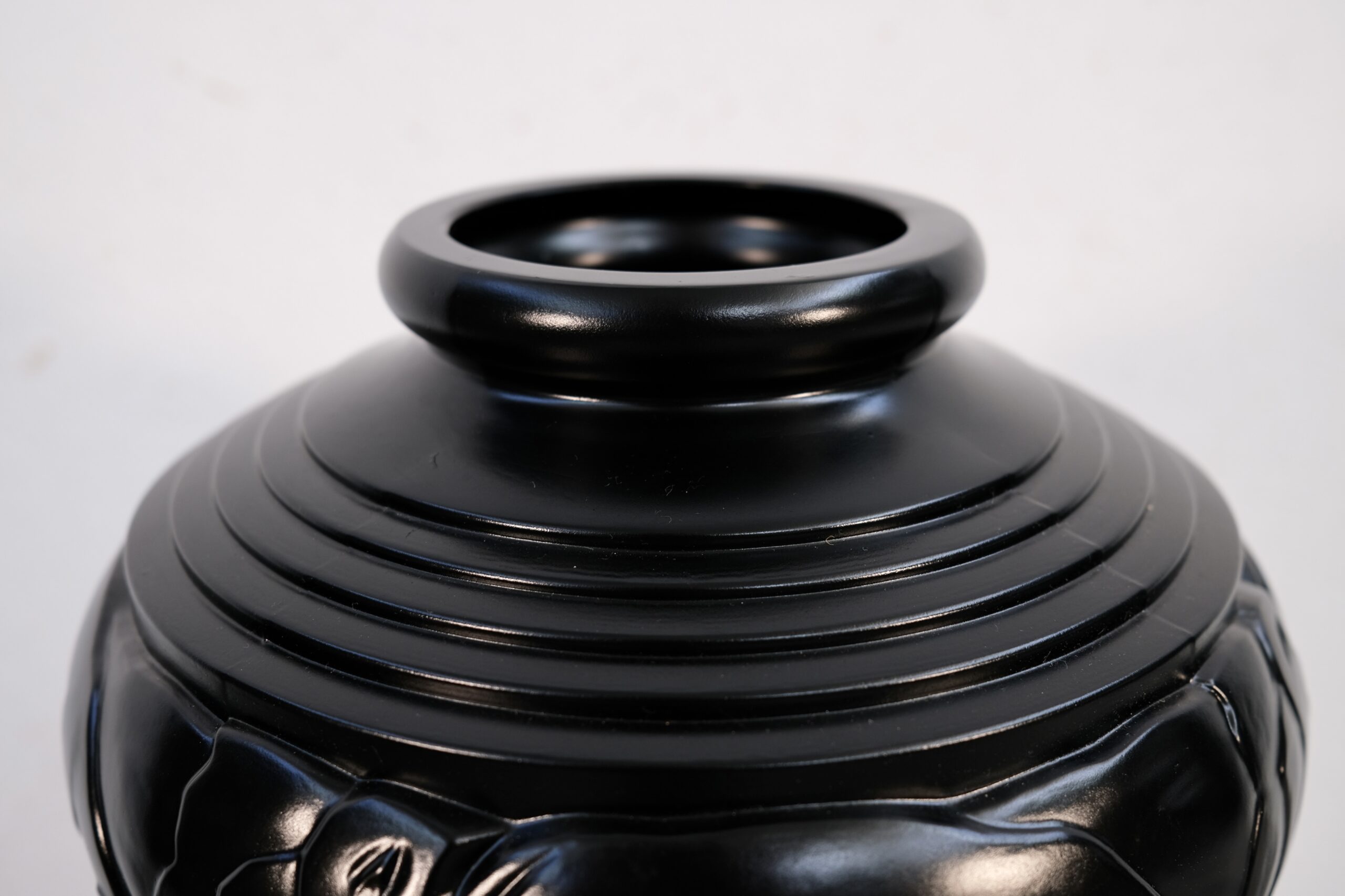
Signed Art Deco Vase by Pierre d’Avesn
Pierre d’Avesn, Paris (1901–1990)
France, circa 1930.
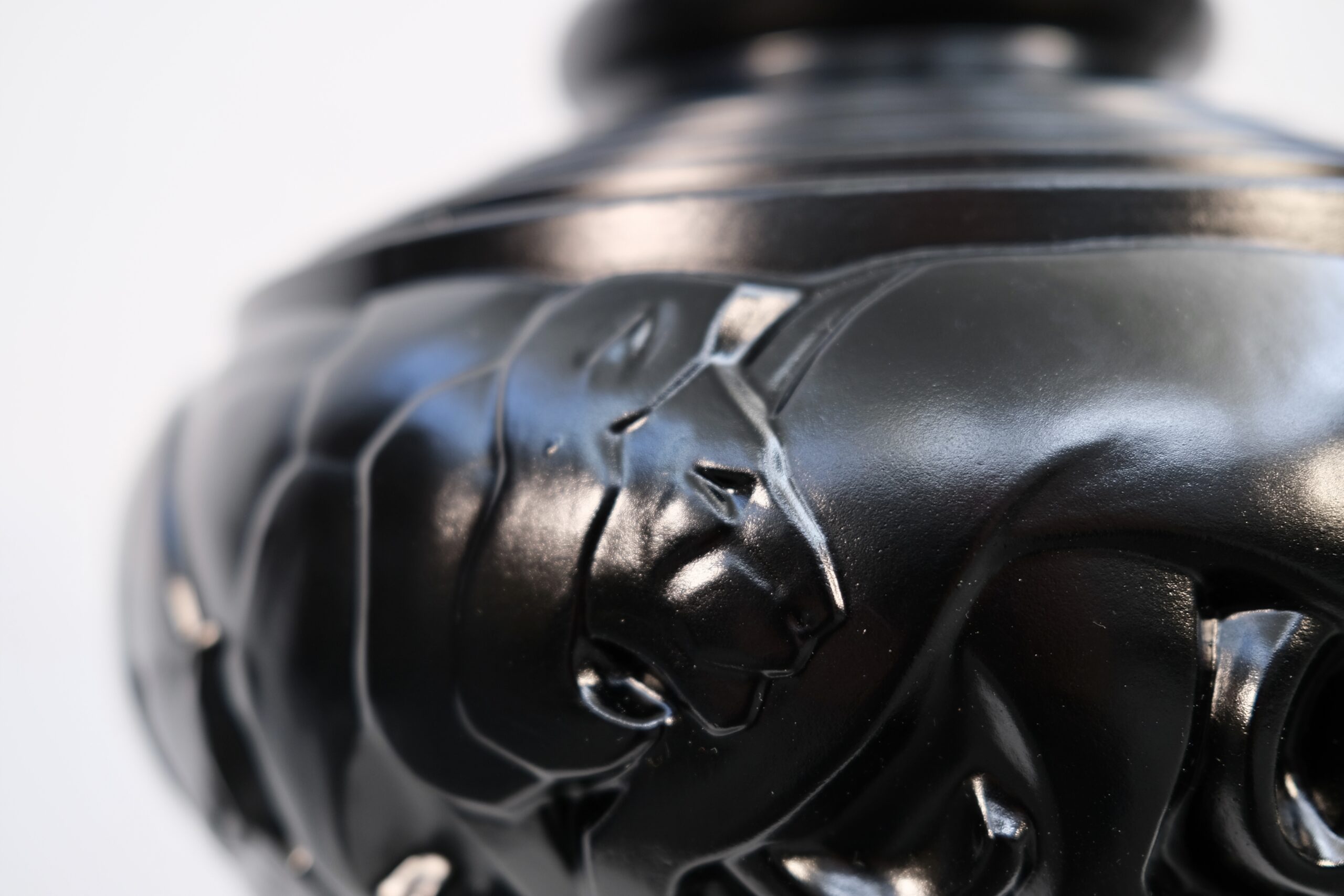
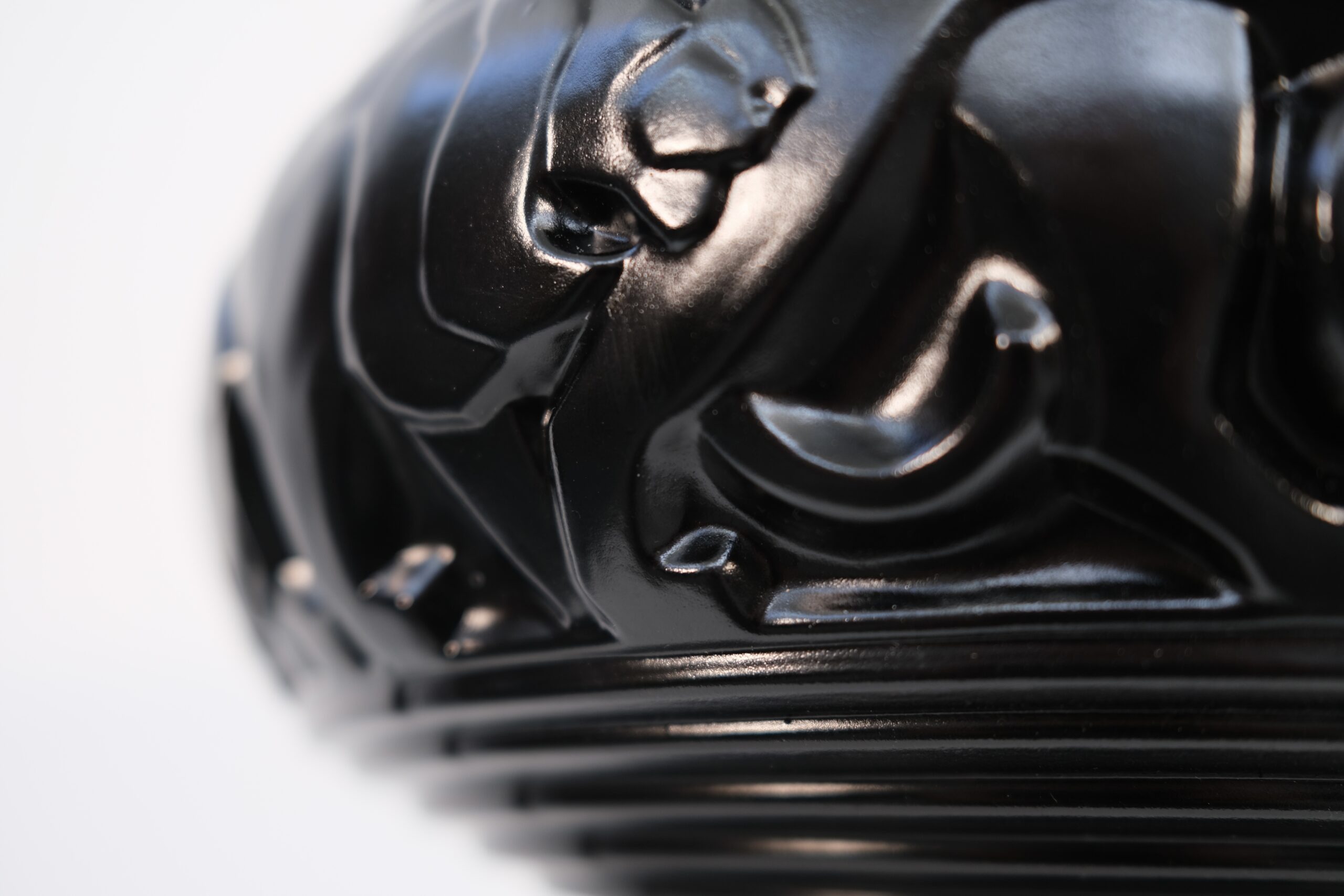
Black satin-finished pressed glass, decorated with a continuous frieze of walking lions.
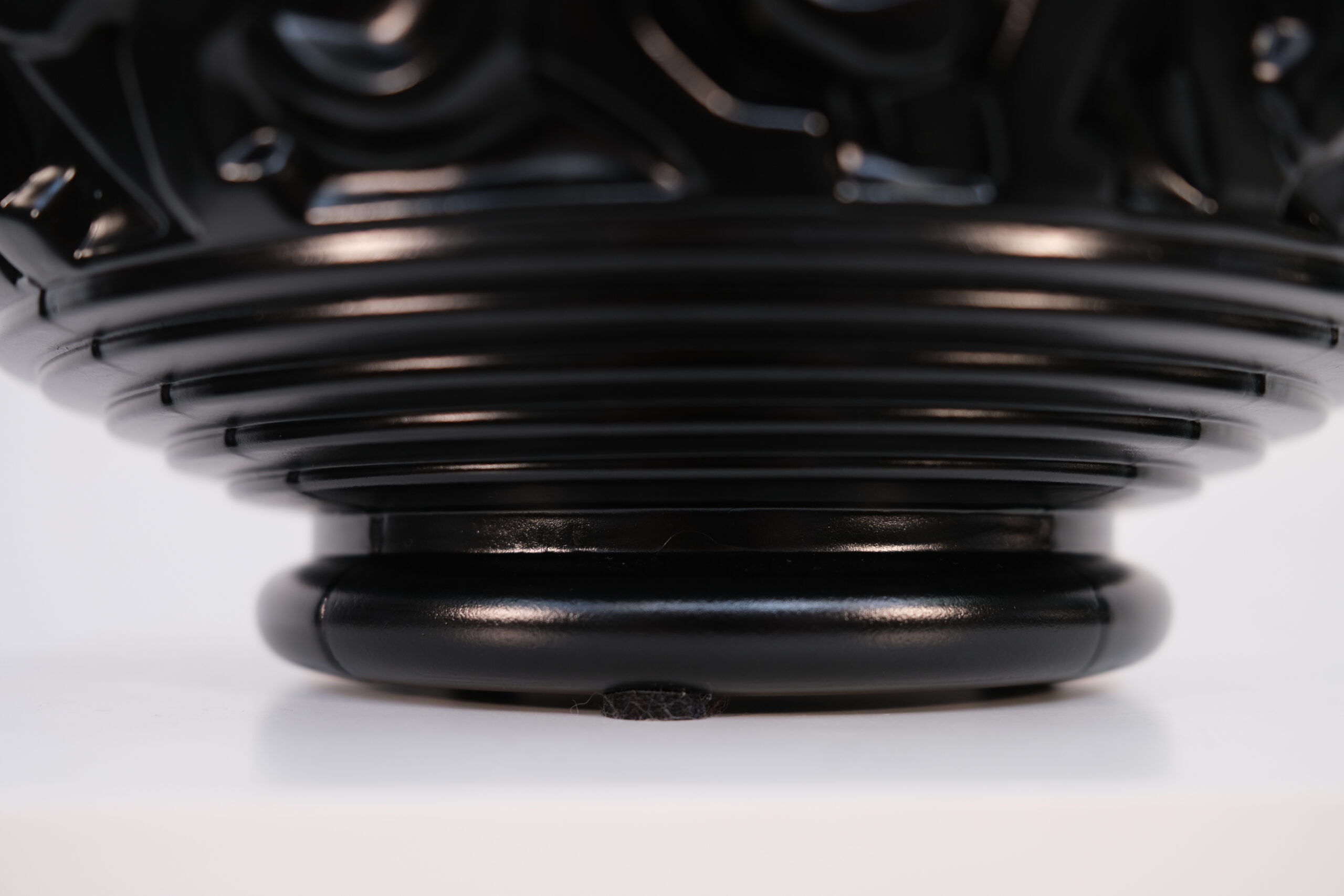
The vase stands on a circular base.
Signed underneath the base.
Height: 22 cm | Diameter: 28 cm
Pierre d’Avesn (1901–1990)
Pierre d’Avesn – French Art Deco Glass Artist
Pierre d’Avesn was an important 20th-century French glass artist and designer. He was born in 1901 under the name Pierre Girre. Some sources also use the spelling Pierre Gire. Under his professional name Pierre d’Avesn, he designed vases, bowls, lighting and decorative glass objects.
His work is distinguished by elegant forms, sculptural reliefs and exceptional craftsmanship. He became particularly renowned for his designs in pressed, opalescent and coloured glass. Today, his creations are among the most sought-after examples of French Art Deco glass.
Early Years with René Lalique
Pierre d’Avesn began his career at René Lalique’s company when he was approximately 14 years old. There, he learned the artistic and technical skills required to produce high-quality art glass.
He worked for Lalique for around ten years. During this period, he gained valuable experience in developing models and moulds for the serial production of glass objects. Several well-known Lalique designs, including the “Serpents” and “Tourbillons” vases, are attributed to Pierre d’Avesn.
His work with René Lalique strongly influenced his later style. Nevertheless, Pierre d’Avesn soon developed his own artistic language. It was powerful and sculptural, yet defined by the refined elegance of French Art Deco.
Independent Designs and the Cristallerie de Saint-Rémy
Around 1926, Pierre d’Avesn left Lalique and began working as an independent designer. Some of his models were produced by the Cristallerie de Saint-Rémy.
During this period, he designed numerous vases, bowls and decorative objects. Many of these works bear the signature “P. d’Avesn”, which helps collectors identify his creations today. However, not all of his designs were marked with his name.
Pierre d’Avesn and Daum Frères
Around 1930, Pierre d’Avesn took on a leading artistic role at Daum Frères. He worked at the glassworks in Croismare, near Lunéville, where he contributed to the development of a new range of high-quality pressed glass.
Objects made at this glassworks were marketed under various names, including “Lorrain”, “Val” and “Verreries de Belle-Étoile”. However, Pierre d’Avesn was permitted to sign important designs with his own name.
His work from this period combines geometric forms with strongly defined relief decoration. The motifs frequently include stylised flowers, leaves, birds, fish and other animals. Frosted and clear glass surfaces create a vibrant interplay of light and shadow.
Work for Verlys
After his time at Daum, Pierre d’Avesn joined Verlys, an important French glass manufacturer based in Les Andelys. From approximately 1937 to 1940, he headed its artistic department.
Verlys was particularly renowned for decorative pressed and opalescent glass. Pierre d’Avesn created numerous elegant designs for the manufacturer. His work often features simplified natural motifs rendered in strong sculptural relief.
His work for Verlys ended with the outbreak of the Second World War. Pierre d’Avesn subsequently returned to working independently and had various designs manufactured by the Cristallerie de Choisy-le-Roi.
Later Work
After the Second World War, Pierre d’Avesn continued his career as a glass designer. He later worked for the Vannes-le-Châtel glassworks, where both new designs and pieces based on earlier models were produced.
His long career spanned several decades and connected him with some of the most important names in French glassmaking: René Lalique, Daum Frères, Verlys, Choisy-le-Roi and Vannes-le-Châtel.
Pierre d’Avesn died in 1990.
Style and Typical Characteristics
Pierre d’Avesn’s glasswork combines the elegance of Art Deco with strong sculptural design. Pronounced reliefs, symmetrical forms and decorative motifs inspired by nature are typical features of his work.
His preferred motifs include:
- Stylised flowers and leaves
- Birds, fish and gazelles
- Geometric ornaments
- Female figures
- Textured and frosted surfaces
The interplay between transparent, satin-finished and opalescent glass is particularly appealing. Depending on the incidence of light, the appearance and visual depth of the decoration change.
Signatures and Attributions
Authentic works may be signed “P. d’Avesn”, “d’Avesn” or “P. d’Avesn France”. Other designs were sold under the names of the glassworks that produced them.
Therefore, the absence of a signature does not automatically rule out an attribution to Pierre d’Avesn. The form, quality of the glass, manufacturing technique and decoration must also be considered. Historic sales catalogues and known model numbers may provide further valuable information.
Importance within French Art Glass
Alongside René Lalique and Marius-Ernest Sabino, Pierre d’Avesn ranks among the important designers of French pressed glass. His designs played a significant role in making high-quality art glass accessible to a wider audience.
His work combines artistic ambition with modern manufacturing techniques. It therefore exemplifies the character of French art glass from the 1920s and 1930s.
Original glass objects by Pierre d’Avesn are now collected internationally. Rare vases, opalescent bowls, animal figures and well-preserved signed works from the Art Deco period are particularly sought after.
Art Deco at RSA Antiquities Wiesbaden
Discover more original Art Deco furniture and decorative objects, including Art Deco dining tables, Art Deco mirrors and Art Deco cabinets at my showroom in Wiesbaden.
Regine Schmitz-Avila – your specialist in original French Art Deco furniture and works of art dating from around 1930.
