Signed sea lions bookends
Nr. 2747 | 1.600,--Euro


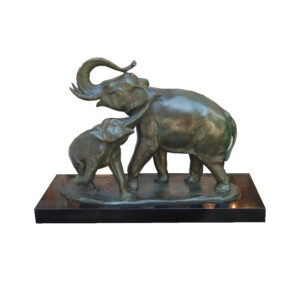
Production of Art Deco bronzes from France from around 1930. Art Deco bronzes are produced in several steps, which are traditional and artisanal. Here is an overview of the process: 1. design and modelling: First, a model, often made of clay or wax, is created. This model serves as the basis for the subsequent bronze casting mould. 2. mould making: A casting mould is made on the basis of the model. In the most common method, the lost wax process, the wax model is poured into a heat-resistant mould, which is then heated to melt and remove the wax. 3. Alloy: Bronze is produced from an alloy of copper and tin. The exact proportions vary, but typically bronze is 85-95% copper and 5-15% tin. These materials are carefully measured and melted. 4. casting: The molten bronze is poured into the prepared mould. Here it is important that the bronze is evenly distributed to avoid bubbles or defects. 5. Finishing: After cooling and removal of the mould, the figure is carefully finished. This includes chasing the surfaces, patinating (for colour accents) and, if necessary, waxing or varnishing for protection 6. Final finish: Finally, the sculpture is inspected and any final adjustments are made to ensure that the artwork meets the high quality standards.


