

Heinz Tetzner (1920–2007) “In the Village”,sold
Nr. 2788 |
Heinz Tetzner
(1920–2007)
“In the Village”
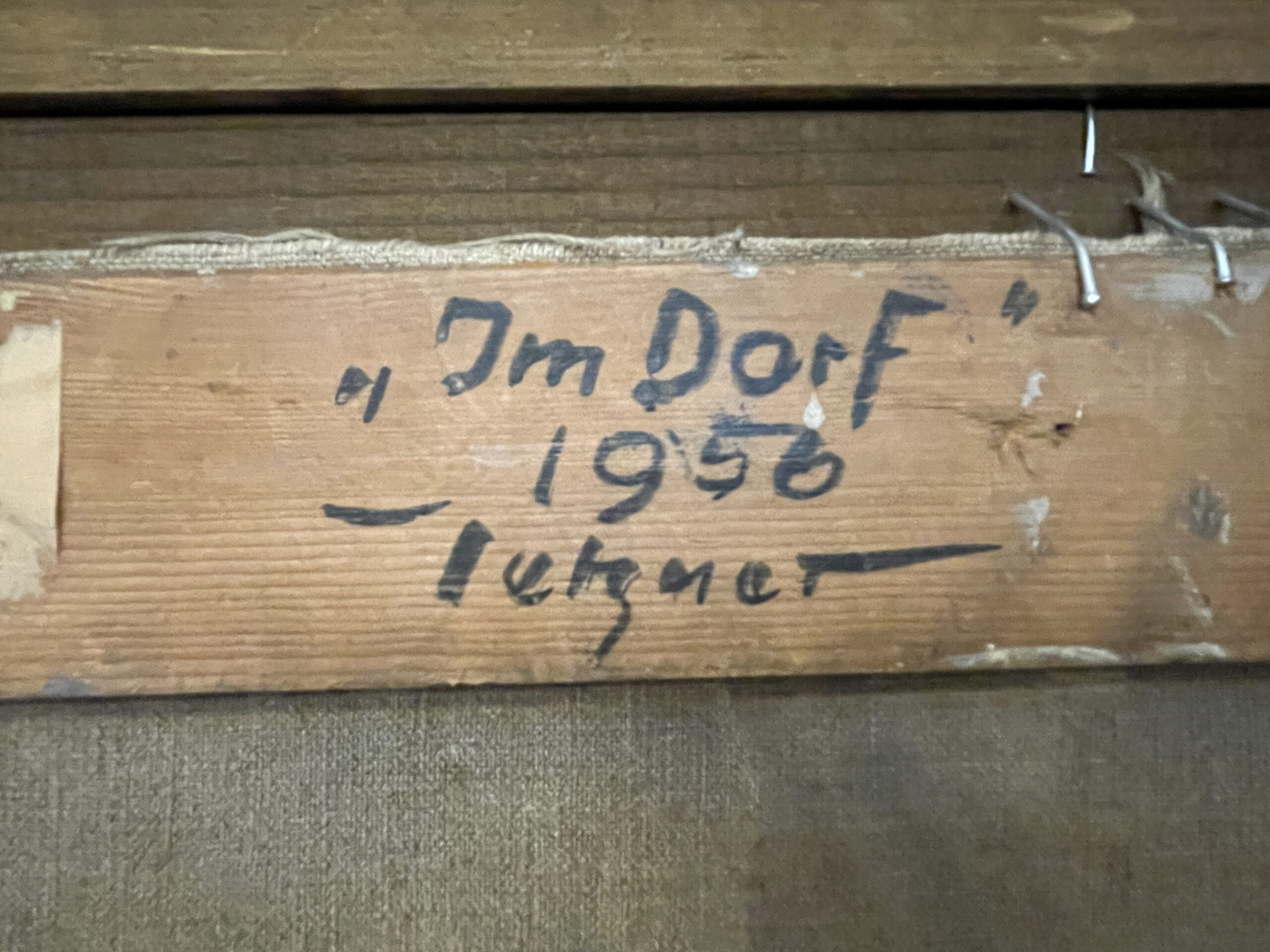
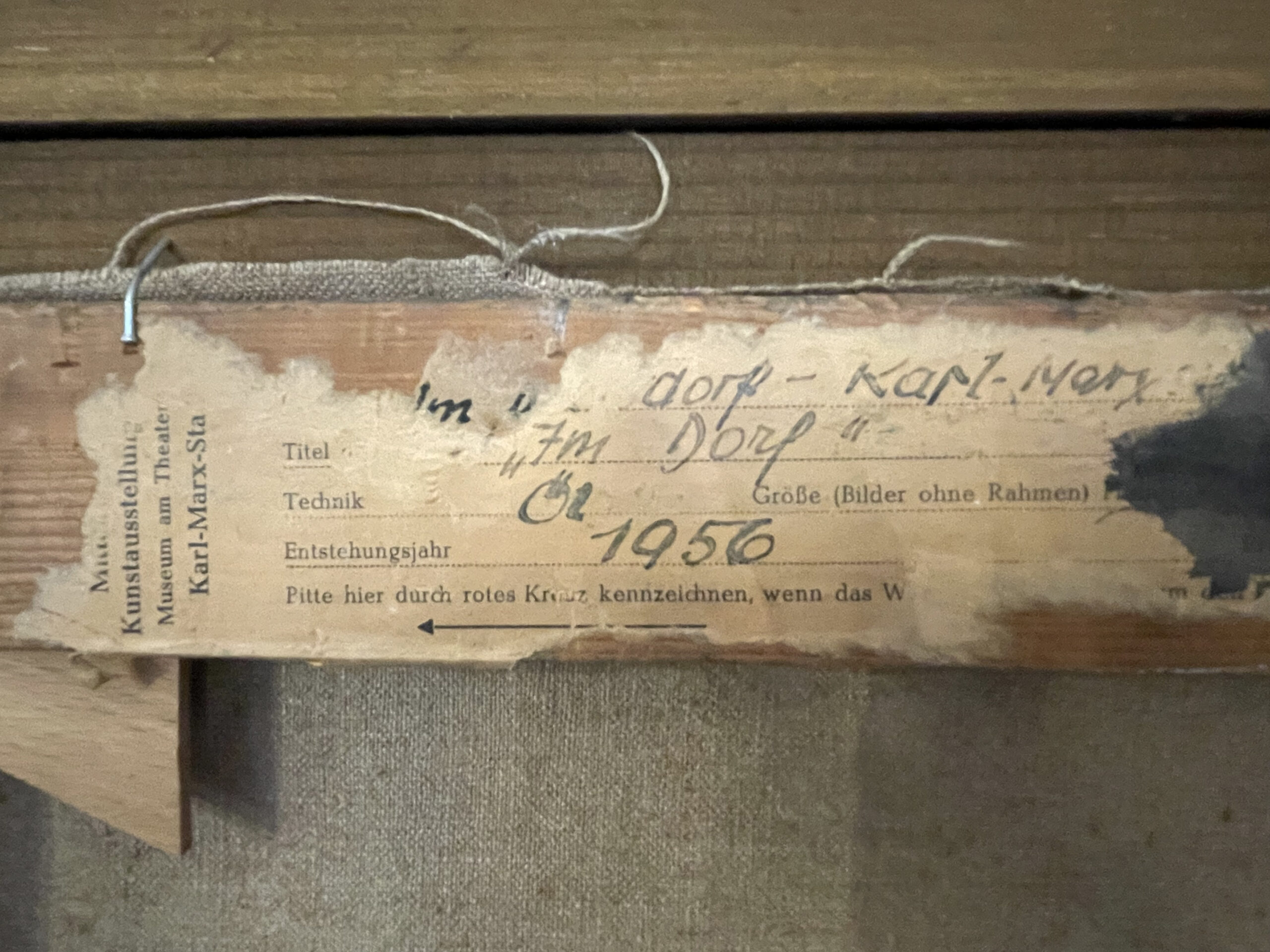
Oil on canvas.
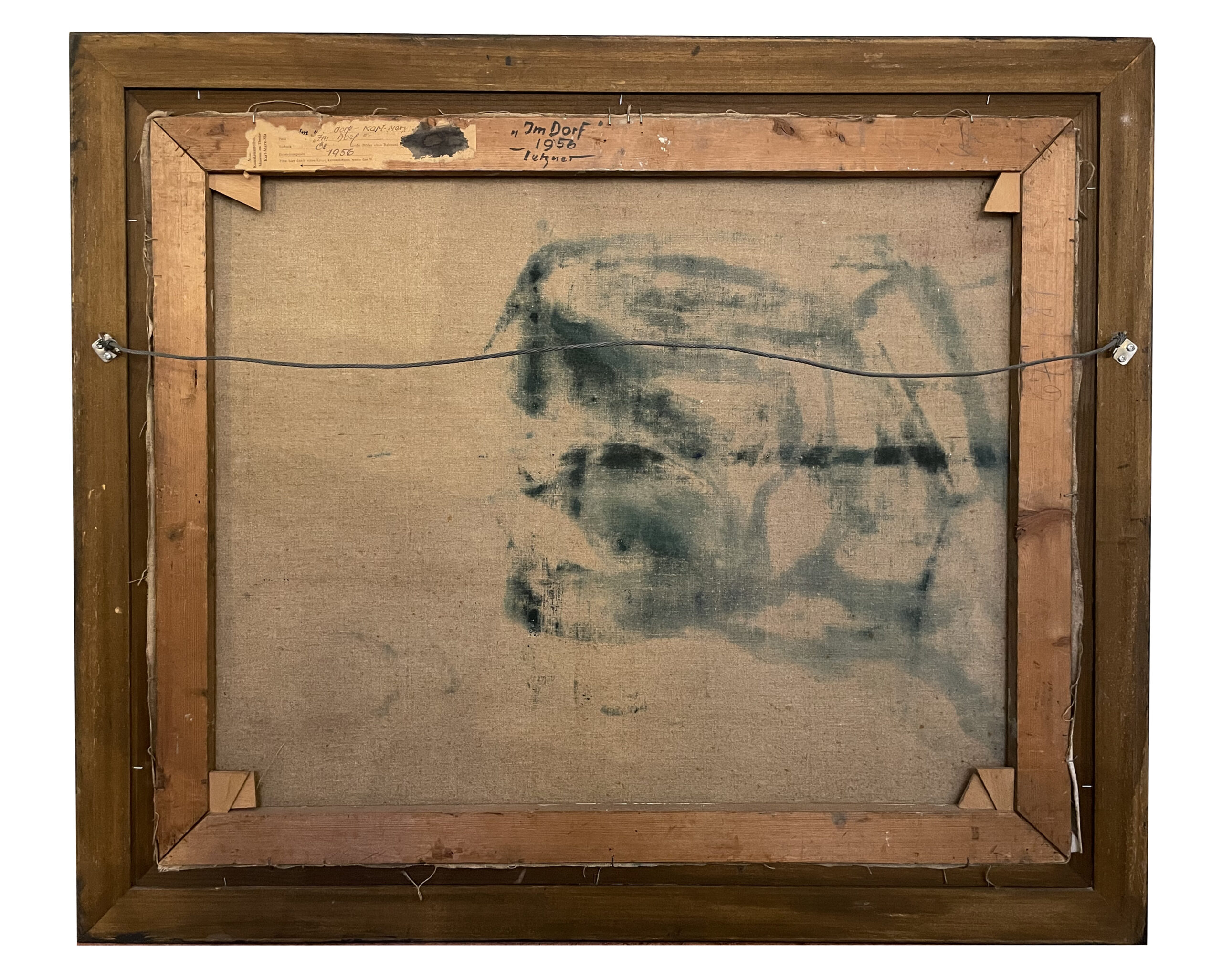
Titled, signed, and dated 1956
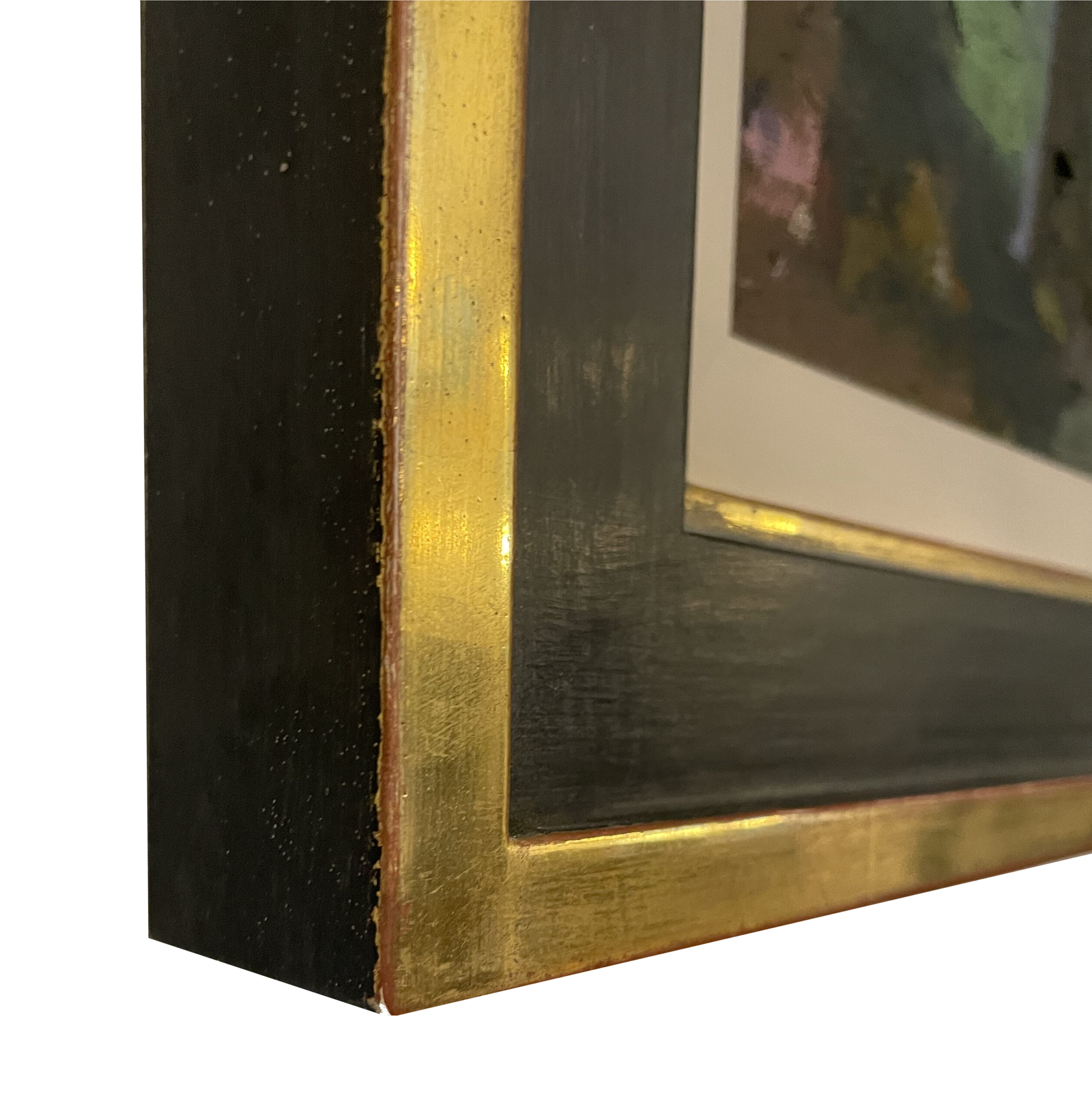
Height: 82 cm | Width: 97 cm (framed)
Provenance: Private collection, Hessen
Formerly Hermann-Simsch Art Gallery, Frankfurt
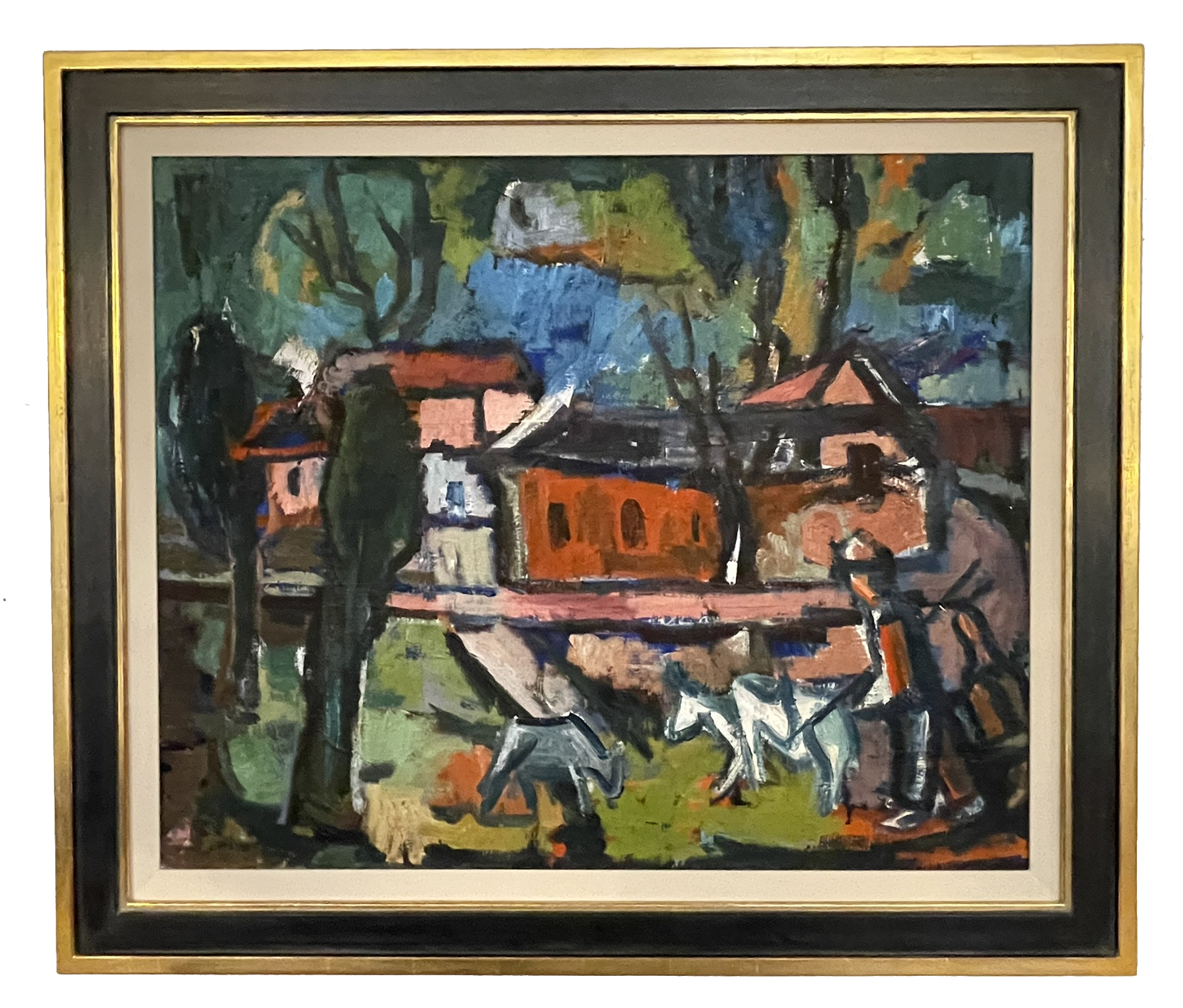
“In the Village” by Heinz Tetzner
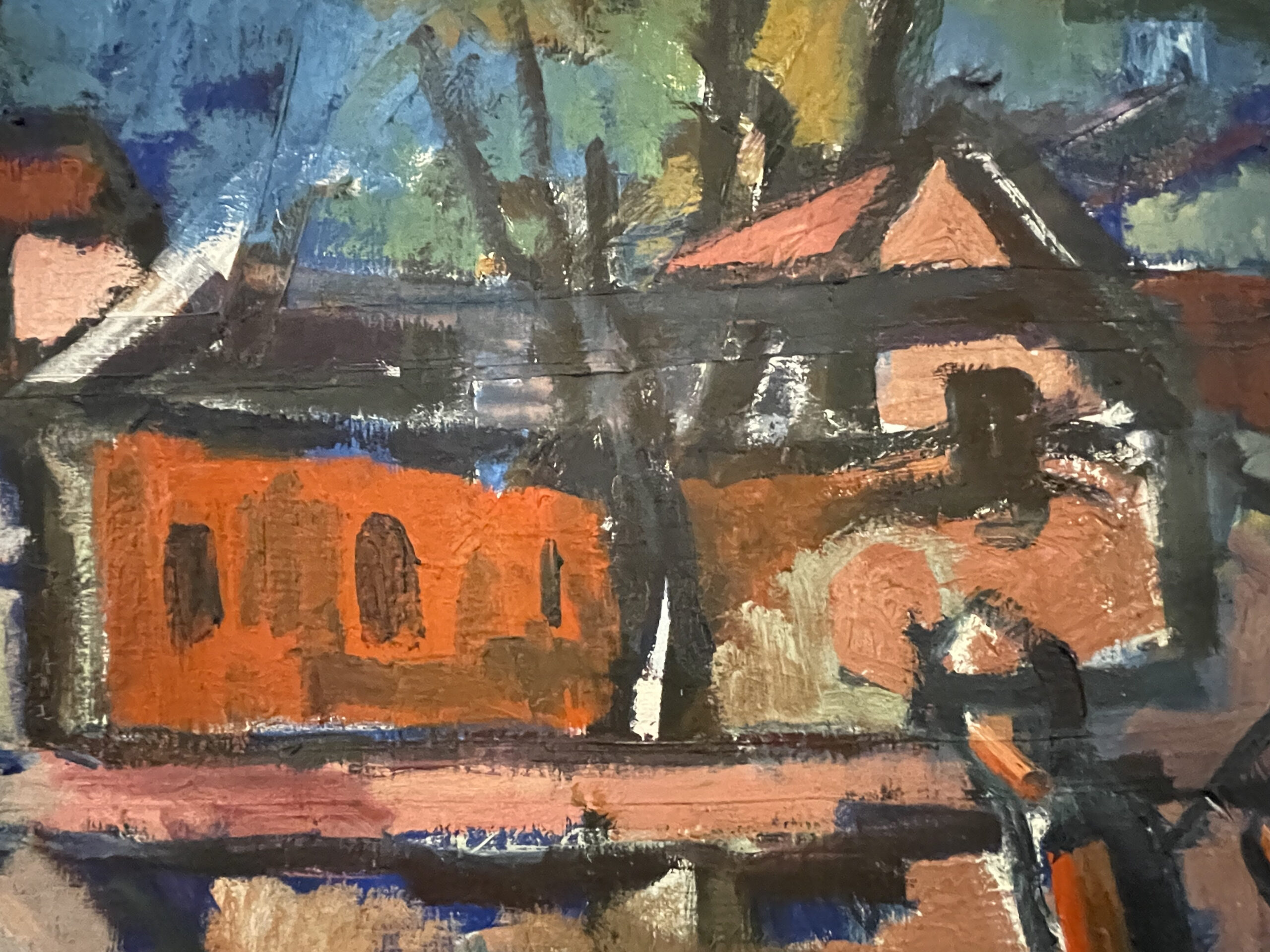
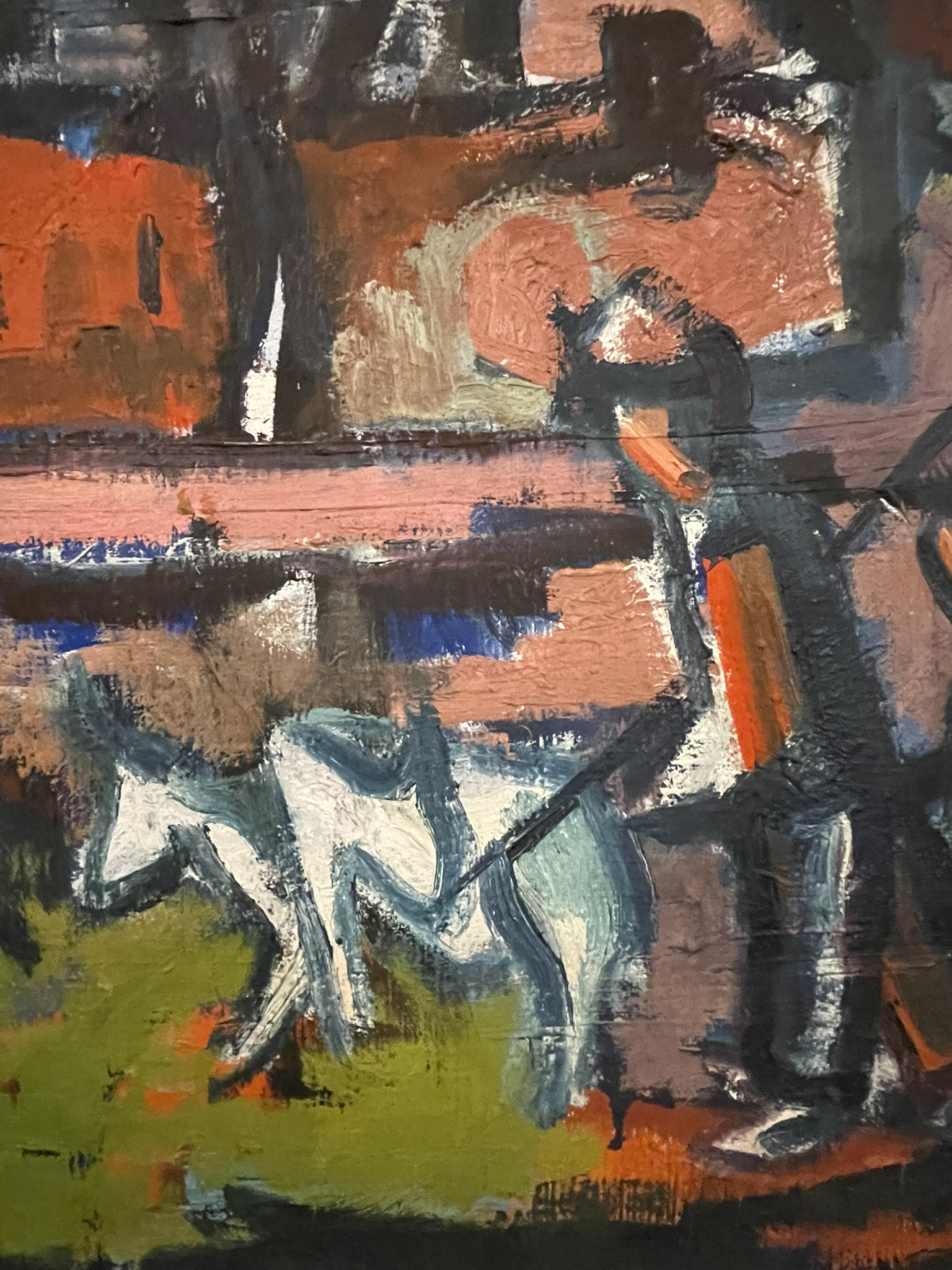
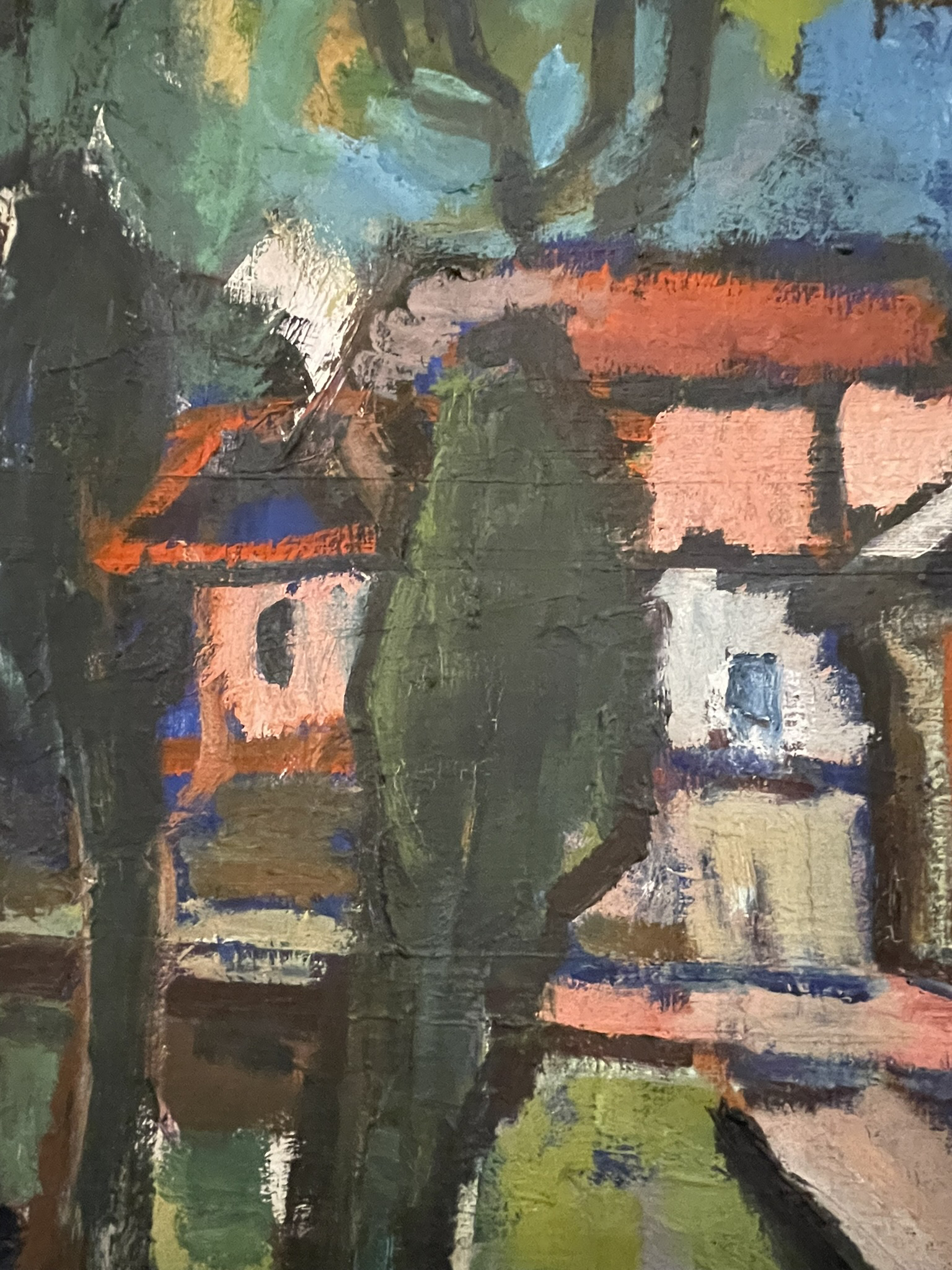
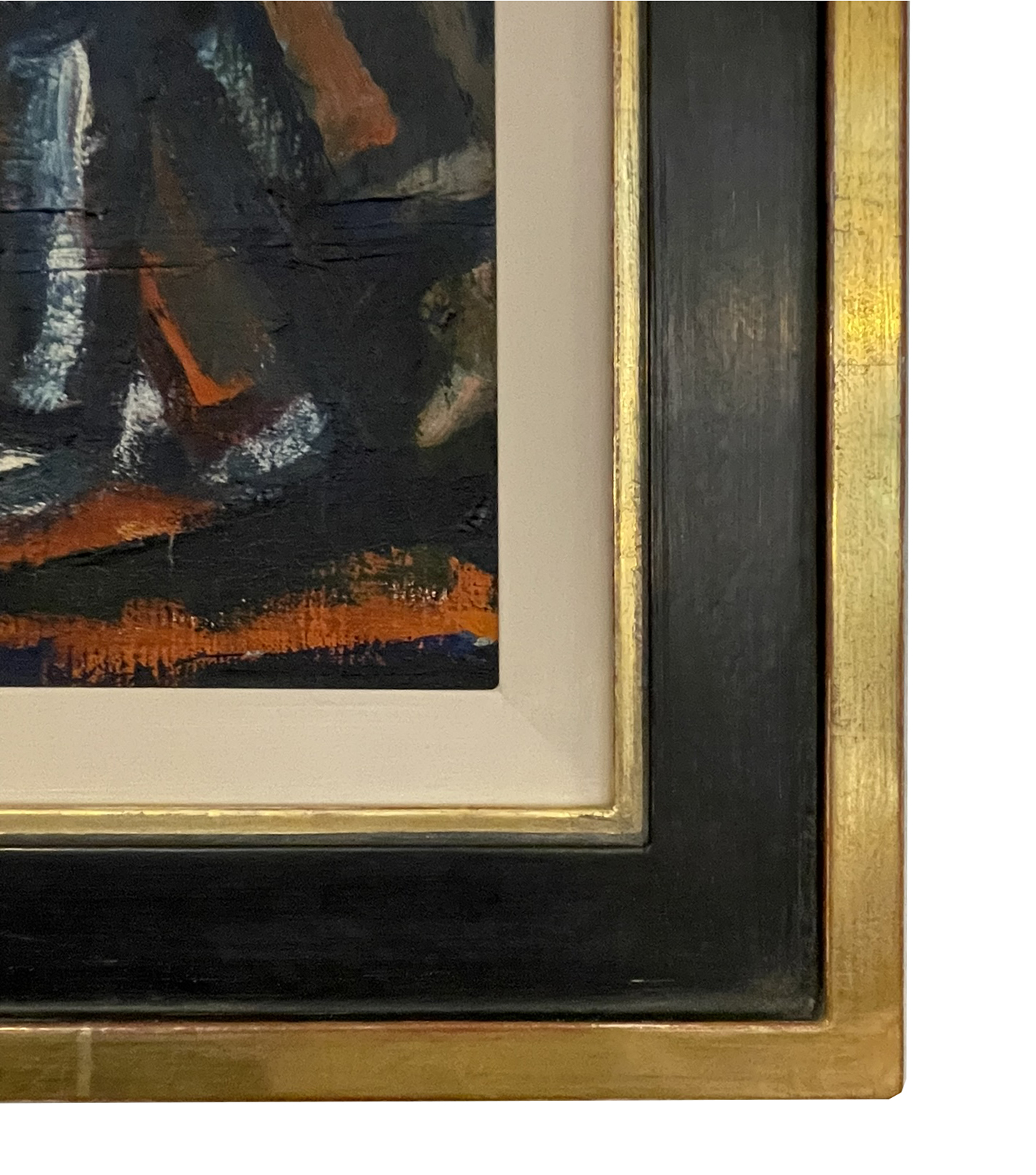
The painting depicts a dense village scene: block-like houses in shades of red and ochre and dark tree trunks as vertical rhythms. There is also a vibrant, dynamic landscape in shades of blue and green. In the foreground, two figures and two animals (silhouetted, angularly rendered) enliven the scene. Tetzner employs expressive foreshortening and a flat, constructive use of color. As a result, space is created less through perspective than through contrasts, layering, and rhythmic brushstrokes. Thus, “In the Village” is experienced not as a topographical view. Instead, it is seen as an emotional pictorial representation of rural life—typical of Tetzner’s expressionist style.
Heinz Tetzner (1920–2007)
was a German painter and graphic artist from Gersdorf (Saxony), whose work is rooted in the tradition of Expressionism.
After an apprenticeship as a pattern designer, he was a guest student at the Königsberg Academy of Art in 1941 (studying under Alfred Partikel, among others). He was taken prisoner of war in southern France in 1944. Then, he began studying at the College of Architecture and Fine Arts in Weimar in 1946.
There, he was particularly influenced by encounters with Pechstein, Heckel, and Schmidt-Rottluff. He was also influenced by the search for the “underlying” aspects of the visible—the psychological dimension in portraiture as well as in landscape painting.
From 1951, he taught in Weimar and worked as a freelance artist in Gersdorf from 1954. Additionally, he was appointed lecturer in Schneeberg in 1960. He remained a member of the Association of Visual Artists of the GDR until 1990.
Late recognition includes the Federal Cross of Merit, First Class (1999). It also includes the founding of the Tetzner Museum in Gersdorf (2001).
Another work from the collection is Heinz Tetzner “Flower Still Life”.
Art Déco bei RSA Wiesbaden
You can find more Art Deco cabinets, Art Deco chests of drawers and Art Deco lamps in my shop in Wiesbaden. Regine Schmitz-Avila – your specialist for French Art Deco furniture and art objects from around 1930.
