

Art Deco Ceiling Lamp “Simonet Frères”
Nr. 2809 | 6.800,-- Euro
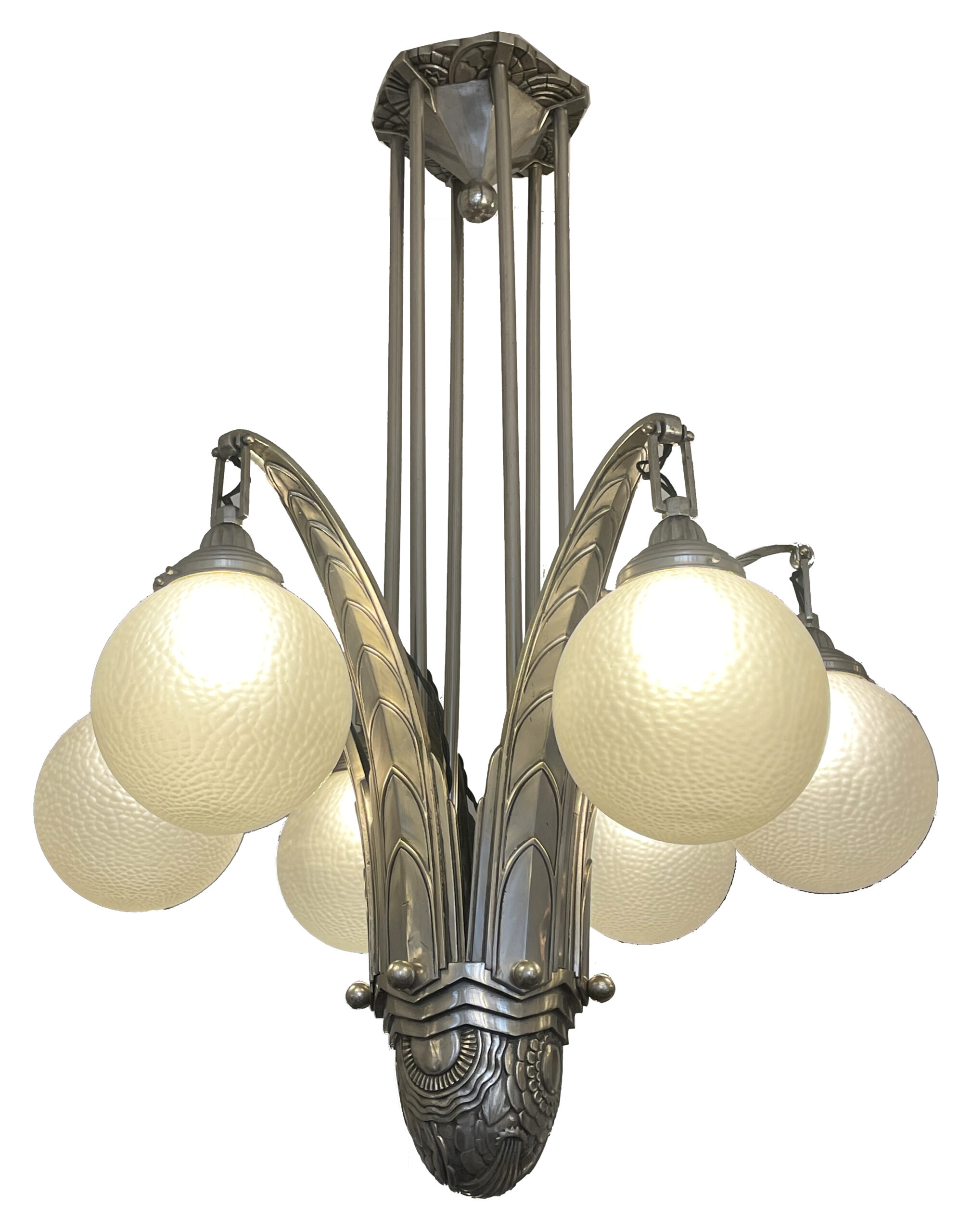
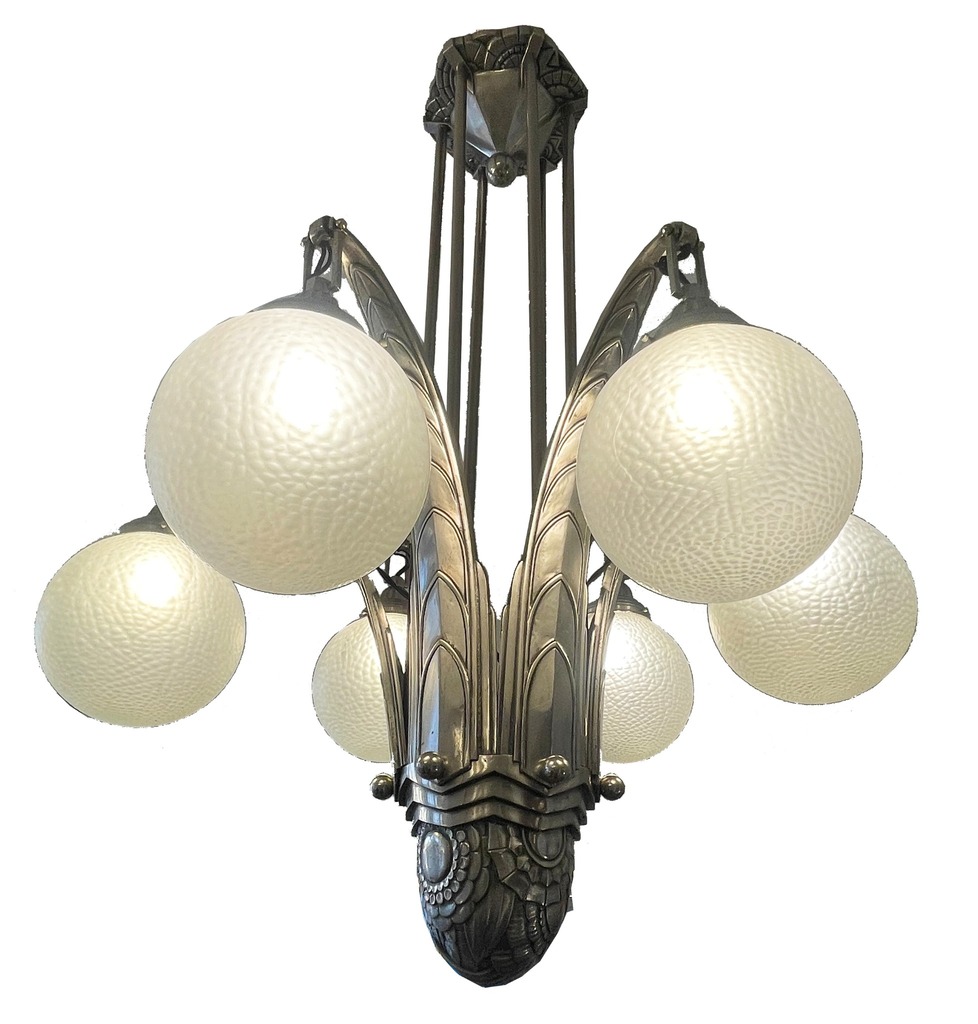
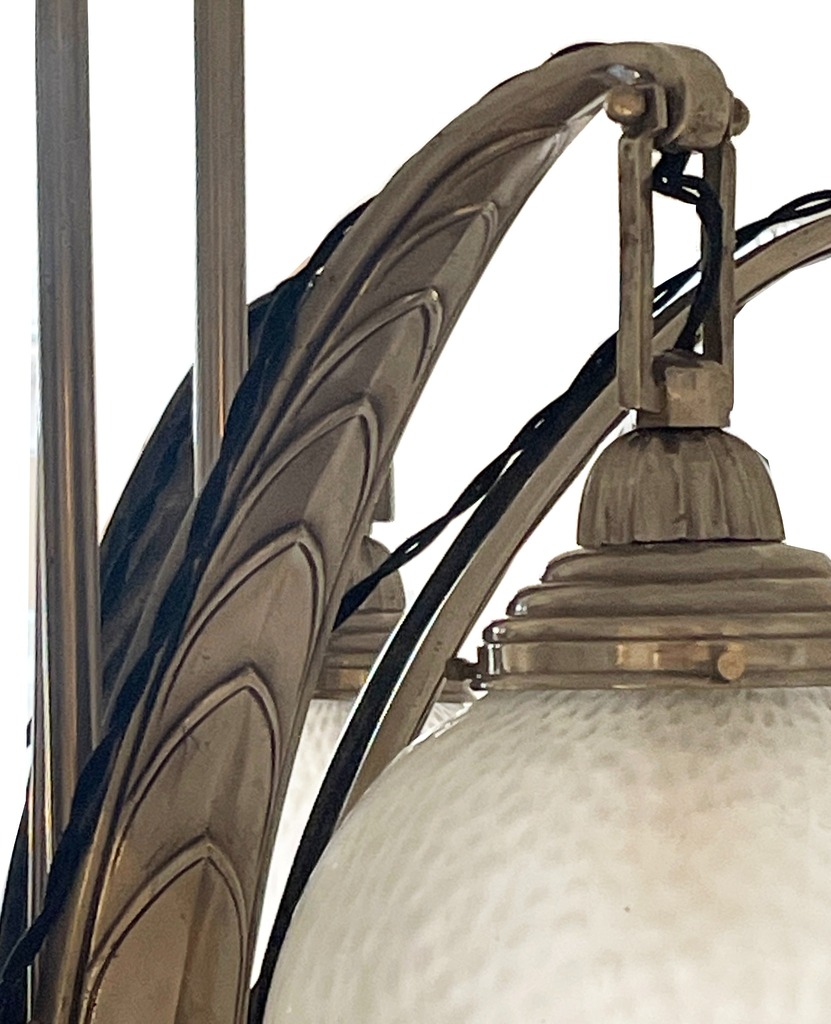
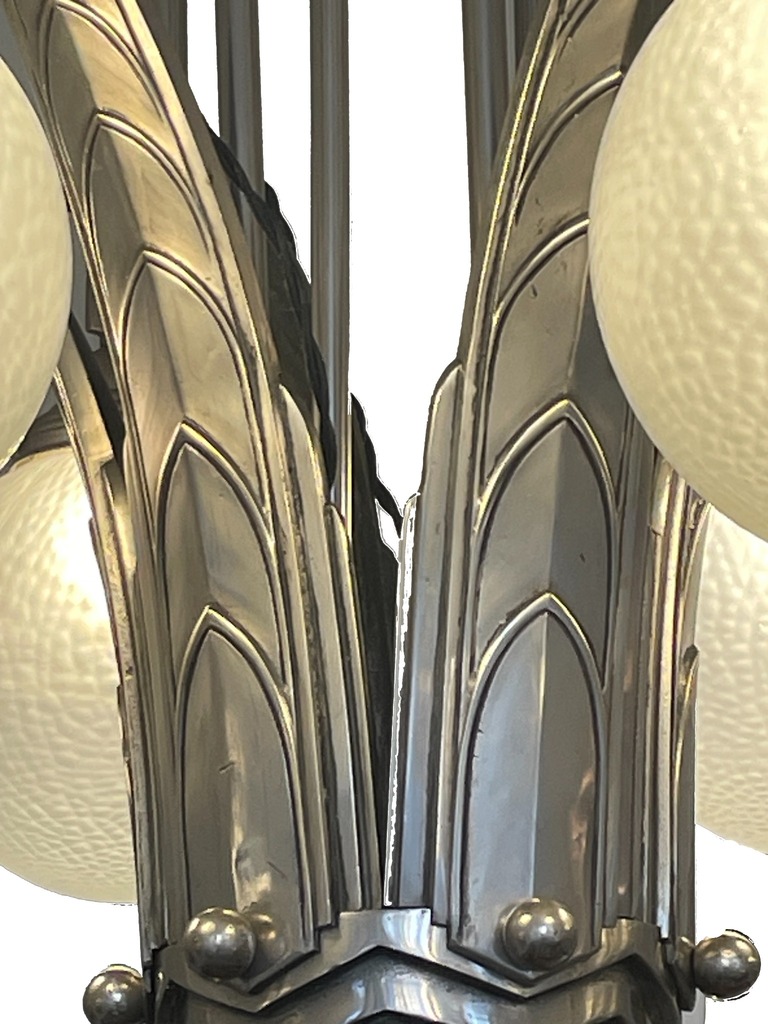
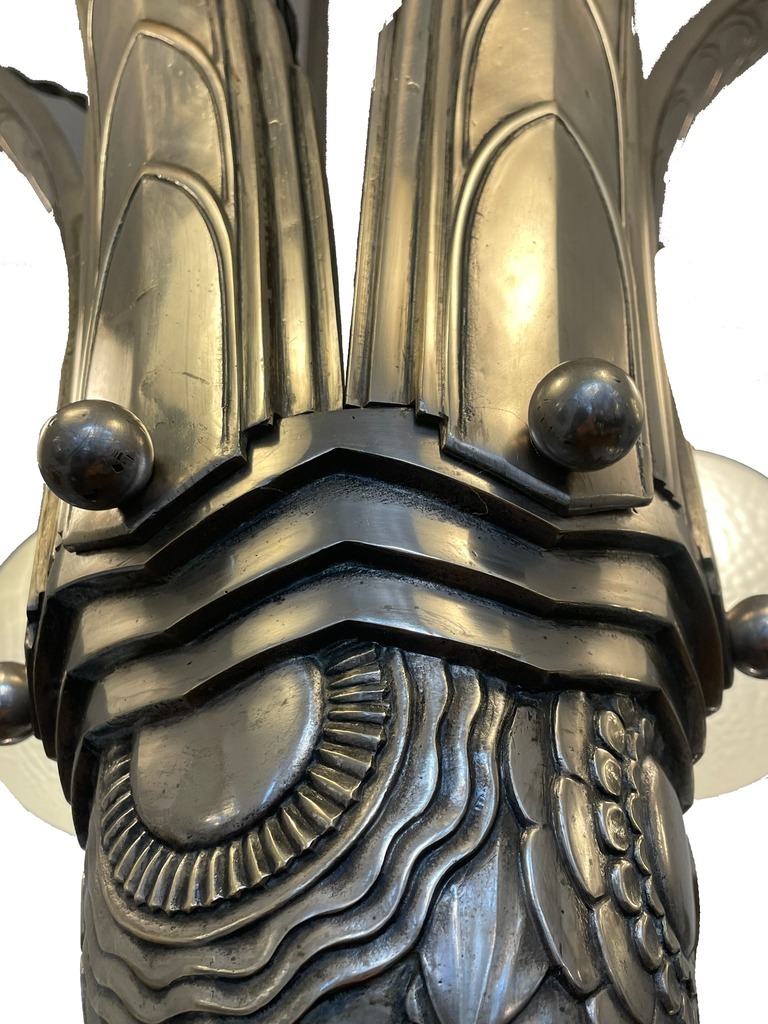
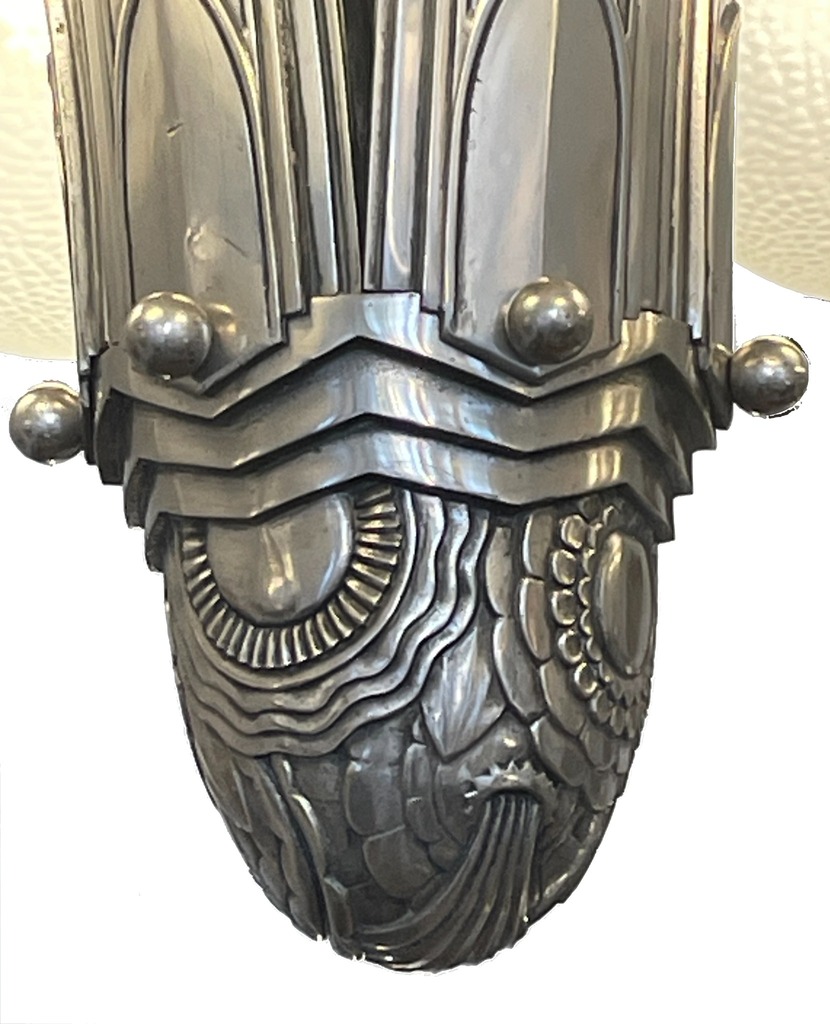
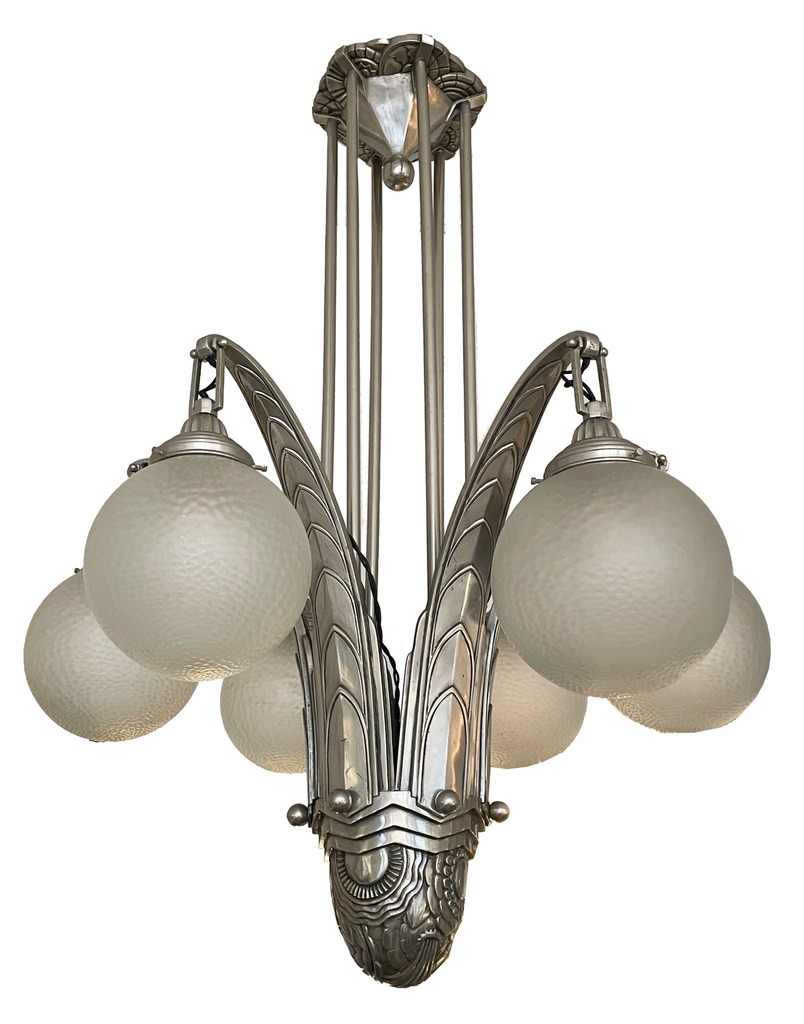
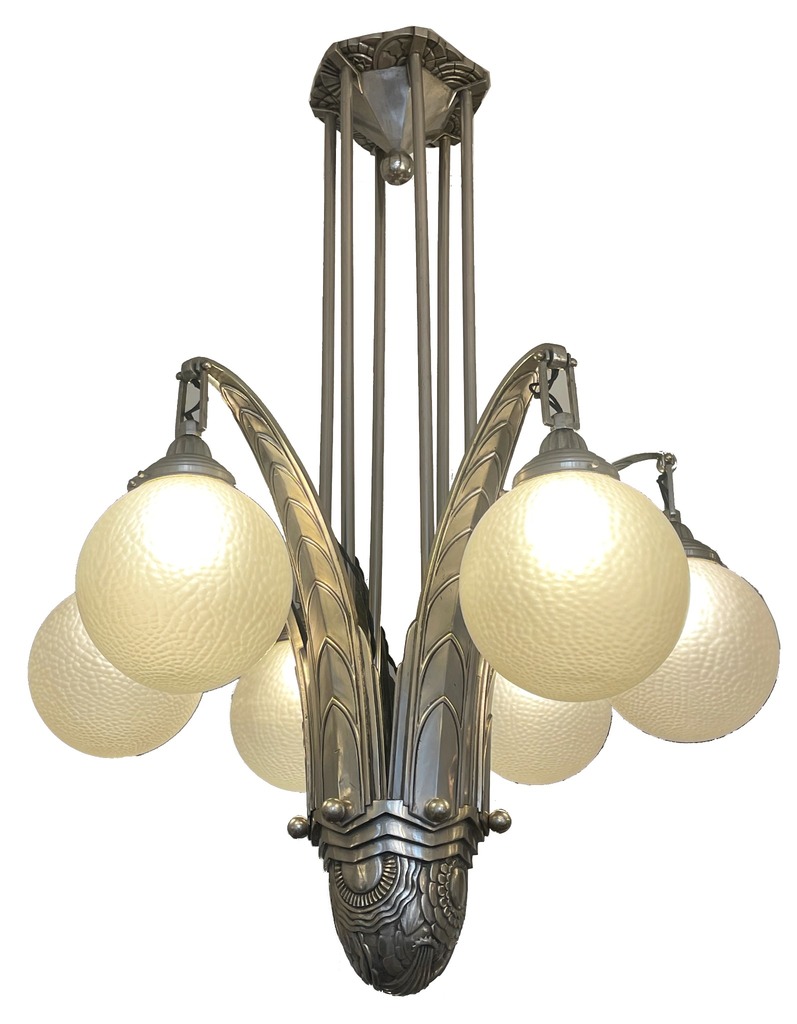
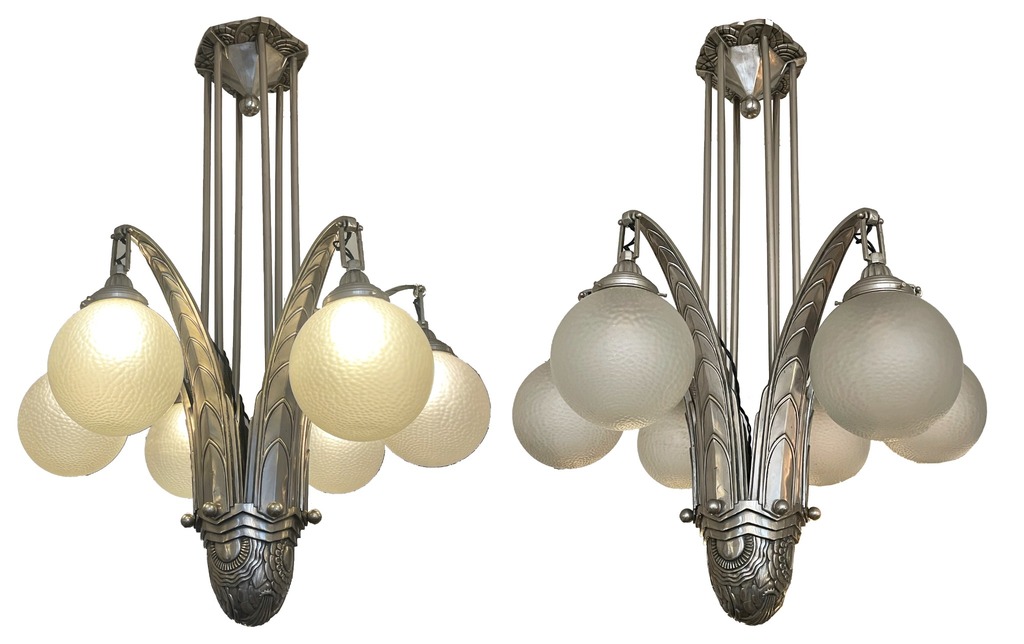
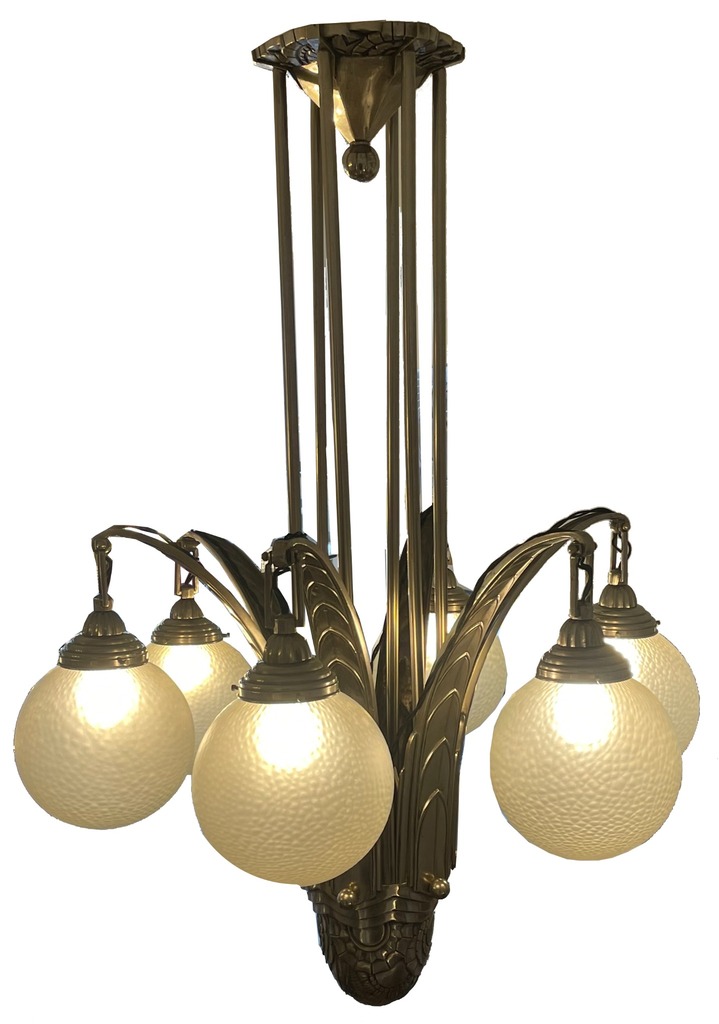
Imposing large Art Deco chandelier
attributed to
Simonet Frères
Paris, circa 1930.
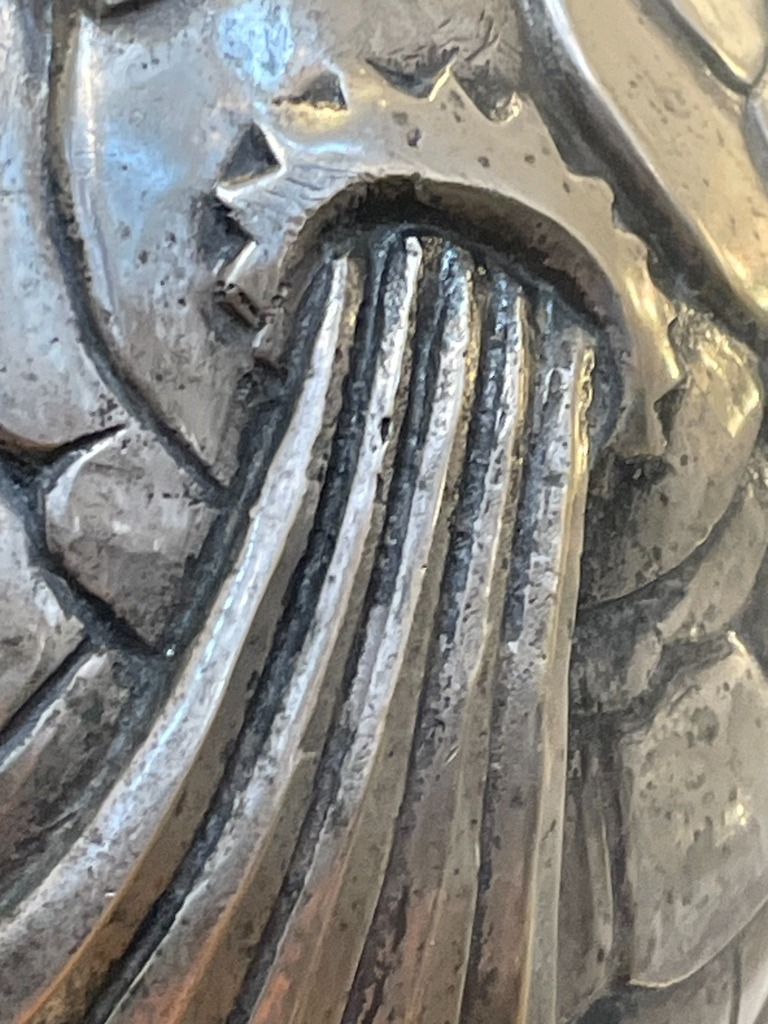
Silver-plated and lacquered bronze.I
Bronze, chased and decorated with geometric patterns. 6 glass spheres.
Height: 110 cm
Diameter: 80 cm.
Simonet Frères is one of the most remarkable French lighting companies of the Art Deco period.
Their work from the 1920s and 1930s combines finely crafted mounts in bronze, brass, or nickel-plated metal with artfully designed pressed and satin-finished glass. In collaboration with the sculptor Henri Dieupart, they created lamps of high sculptural quality that exemplify the elegance and formal discipline of French Art Deco.
French Art Deco ceiling chandelier by Simonet Frères, Paris, circa 1930
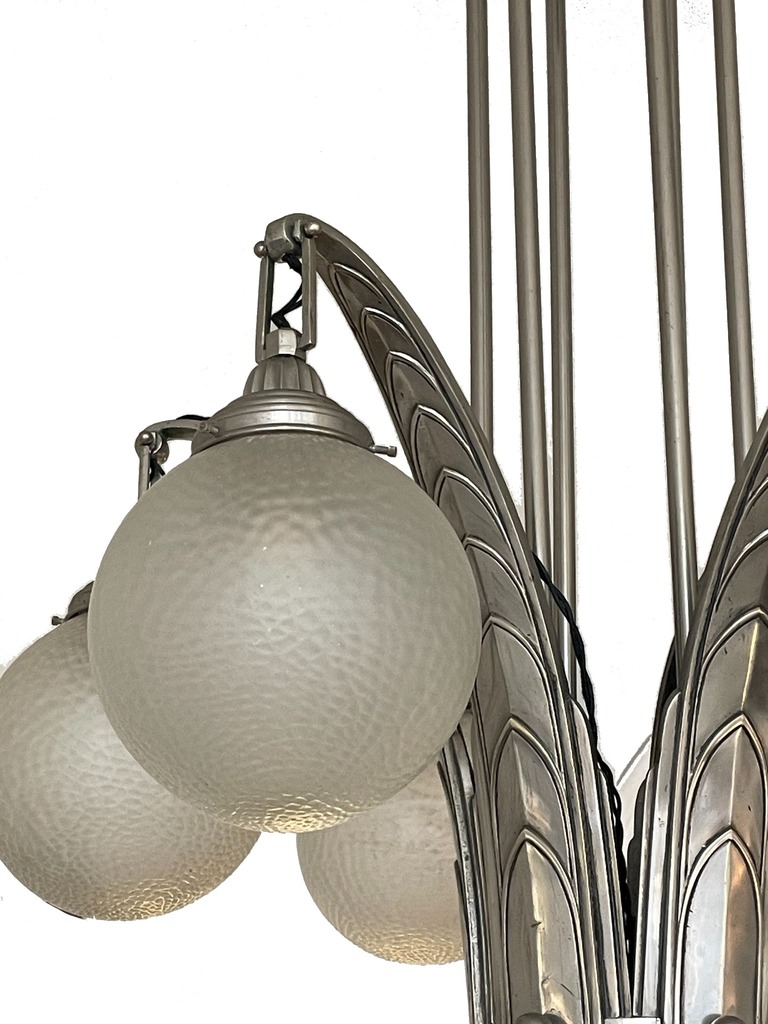
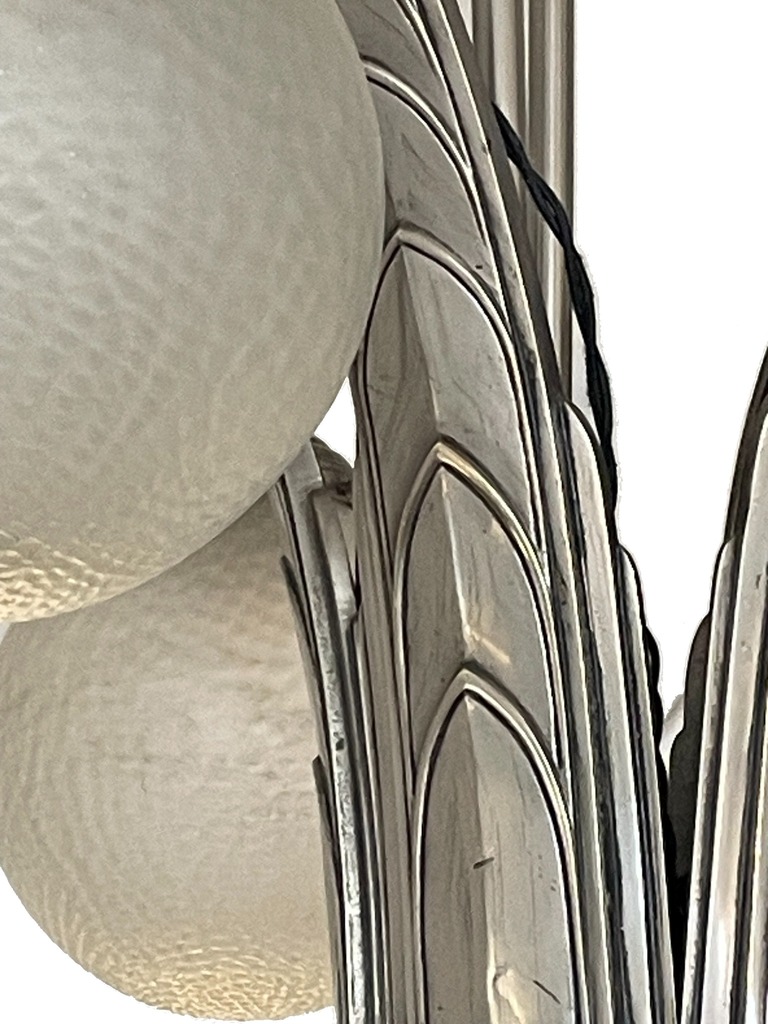
This exceptional chandelier from the Parisian manufacturer Simonet Frères impressively embodies the elegance and formal rigor of French Art Deco from the late 1920s and early 1930s. The long-established firm Simonet Frères, located on the Rue des Archives in Paris, had specialized in the production of high-quality lighting fixtures and finely crafted bronze mounts since the early 20th century. Particularly characteristic is the combination of metallic precision with artfully designed glass shades made of pressed and frosted glass, often created in collaboration with renowned artists of the time. This chandelier captivates with its architecturally structured body: the vertically rising, austere struts lend the light an almost cathedral-like quality, while the stylized, upward-curving metal leaves mark the transition from functional object to sculptural form. This dynamic design is typical of the heyday of Art Deco, in which geometric clarity and decorative refinement merge into a harmonious whole. The six spherical lampshades made of finely textured, satin-finished pressed glass produce a pleasantly diffused, warm light. Such glass was a central design element of Parisian lighting design at that time and underscores the luxurious yet modern appeal of the lamp.
Of particular note is the richly decorated central finial with its ornamental relief, which lends the chandelier additional sculptural depth and elevates it far beyond purely functional lighting. The nickel-plated or silver-plated bronze gives the object that elegant coolness characteristic of high-quality French Art Deco lighting. Overall, this is an outstanding example of French lighting design from around 1930 – an object that impresses with both its artistic quality and its commanding presence, and which integrates perfectly into sophisticated interiors.
History of the factory
Simonet Frères is among those French lighting manufacturers who particularly convincingly embody the transition from the decorative arts of the 1920s to the mature design language of Art Deco. On the art market, the company appears as a French manufacturer or publisher of lamps and chandeliers from the 1920s and 1930s; surviving pieces are primarily made of brass, bronze, nickel-plated bronze, and with pressed, satin-finished, or patinated glass.
A defining characteristic of Simonet Frères is the combination of technical precision and ornamental elegance. The metal fittings typically appear austere, clearly structured, and architectural, while the glass forms a softer, light-modulating counterpoint. This is precisely where a key feature of French Art Deco lighting around 1930 becomes apparent: the focus shifts from the opulent, dynamic decoration of Art Nouveau to the controlled synthesis of geometry, material effects, and stylized natural forms. The repeatedly documented collaboration between Simonet Frères and the sculptor Henri Dieupart is particularly revealing. Market and object sources identify Dieupart as the designer of individual models; a rare veilleuse from around 1930 explicitly mentions stylized lotus leaves and shell shapes as decoration. These sources also note that Dieupart collaborated with Albert Simonet on such Art Deco pieces, which were manufactured at the Cristallerie de Choisy-le-Roi.
This connection is particularly interesting from an art historical perspective: Simonet Frères thus represents not only a lighting manufacturer, but also a typical French network of publisher, designer, and glass production, characteristic of the luxurious interior design of the interwar period. In Art Deco, the light fixture became a total work of art, encompassing sculpture, architecture, and lighting design. Simonet Frères models therefore often depict not merely functional illumination, but a consciously staged light sculpture. Stylistically, the known works of Simonet Frères range from floral stylization to cubic-architectural rigor. On the one hand, there are decorative glass forms with leaf or palm motifs, and on the other, more austere, almost constructivist solutions, typical of the early 1930s. A chandelier documented on the market from around 1930 is described as having twelve glass shades with palm motifs and a central glass shade with floral decoration; another large model from around 1935 combines silvered bronze with frosted molded glass. This range clearly illustrates how Simonet Frères mediated between decorative refinement and modern functionalism within the Art Deco movement. From today’s perspective, Simonet Frères lamps are particularly significant because they exemplify French luxury tastes of the interwar period: high-quality metalwork, the seamless integration of artistically designed glass, and a design language that not only utilizes light technically but also stages it atmospherically and with a sense of prestige. In this sense, Simonet Frères lamps are not merely functional objects but important testimonies to that era in which Paris and France were internationally recognized as the center of elegant modern interior design.
