


Art Deco chest of drawers, France around 1930,sold
Nr. 2803 |
Very nice
Art Déco
chest of drawers
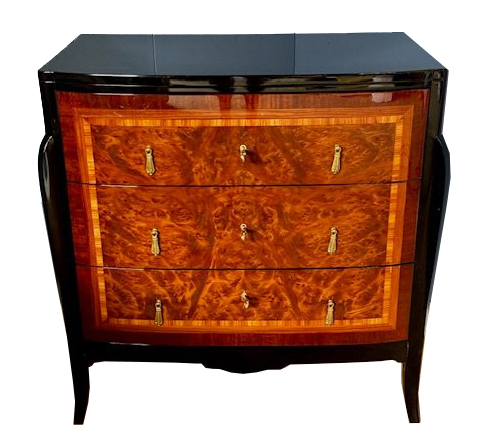
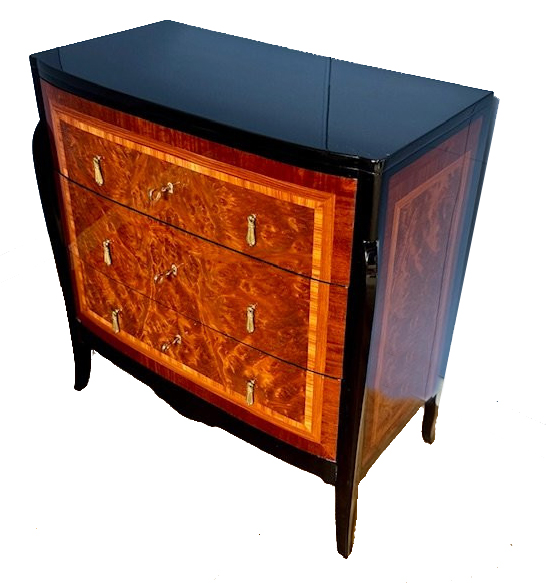
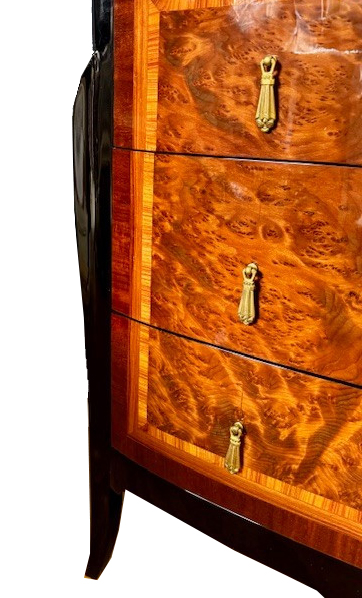
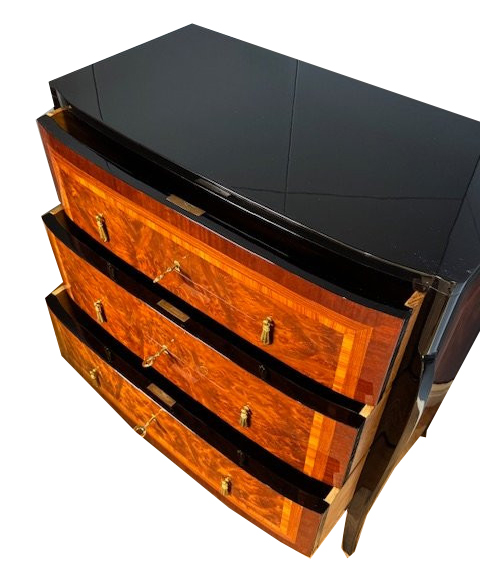
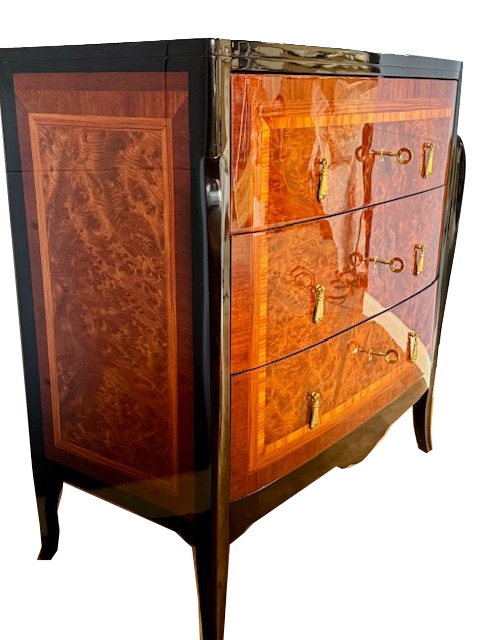
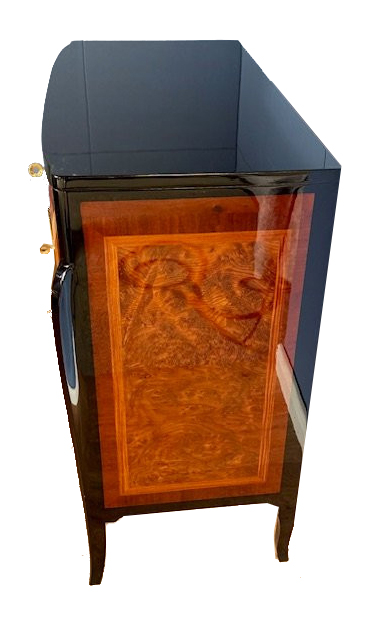
France, circa 1930. Elm burl and maple with black lacquer, flanked by volutes on the sides; splayed legs, black polished top, and curved lower edge. The sides are inlaid in elm burl in the center, framed by banded inlays. This exquisite Art Deco Chest of drawers stands out for its historic elegance.
Height: 84 cm
Width: 80 cm | Depth: 40cm
Exceptional Art Deco chest of drawers
This Art Deco chest of drawers stands out as an exceptional piece of furniture. It combines expert craftsmanship with rich art historical references. The gently curved front and slightly splayed legs reflect the elegant design language of the late 18th century. Style recalls the transition between Rococo and the classically inspired Louis XVI period.
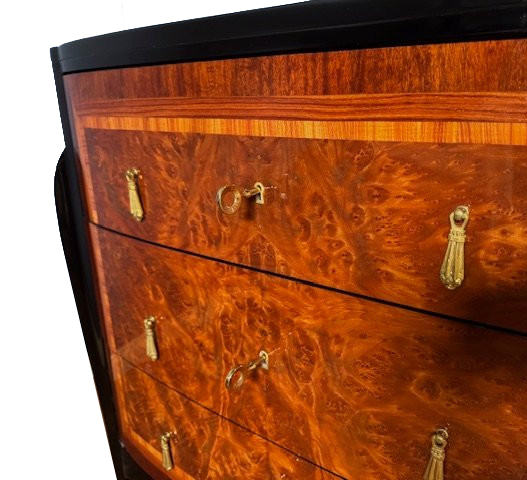
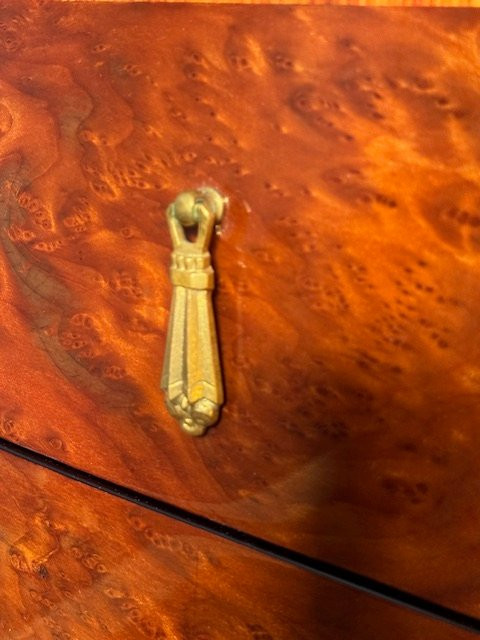
The structure of the three drawers is clearly organized. Decorative fittings create a rhythmic pattern that enhances its visual balance. The restrained ornamentation marks a conscious move away from excessive decoration, giving the piece timeless elegance.
The veneer work is especially remarkable. Vibrantly flamed burl wood forms the central highlight. Its symmetrical, mirror-like arrangement adds depth and visual harmony. This refined technique has its roots in the tradition of European cabinetmaking—perfected in Paris and in the royal workshops of southern Germany.
A lighter wood frame encloses the veneer, providing contrast and structure. It balances the dynamic grain of the center while emphasizing form and geometry. The dark, polished top panel creates another visual contrast. Its glossy surface enhances the warm tone of the body and lends a sense of refinement.
This interplay of light and dark, movement and order, captures the artistic spirit of the era. The chest functions not only as storage furniture but also as an independent work of art, embodies essential values of its time:.
Harmony, proportion, and exceptional craftsmanship.
In essence, this Art Deco chest of drawers represents the perfect synthesis of fine cabinetmaking and sophisticated Art Deco design—an enduring symbol of style and artistry.
This chest of drawers is unique, just like this one High-quality Art Deco tall chest of drawers.
Art Déco bei RSA Wiesbaden
Weitere Art Déco Einrichtungsgegenstände wie Art Déco Esstische, Art Déco Spiegel und Art Déco Schränke finden Sie in unserem Inhaber geführten Fachhandel für Antiquitäten – speziell Art Déco -in Wiesbaden.
