


Signed Art Deco Sculpture – “Aube”
Nr. 2856 | 4.200,--€
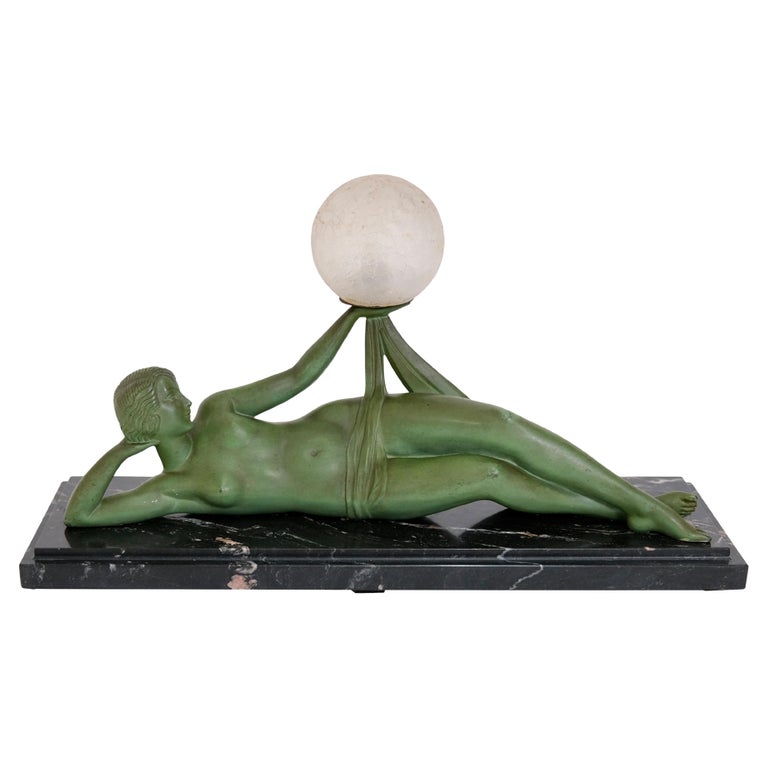
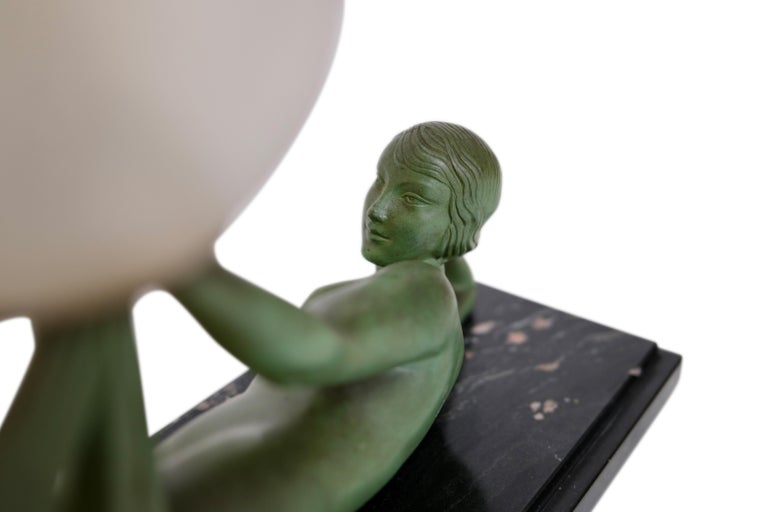
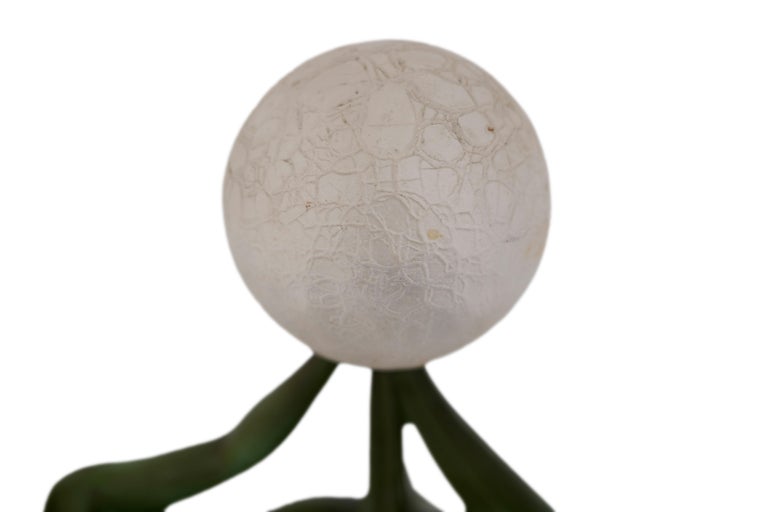
Signed Art Deco Sculpture – “Aube”
“Aube” (French for “Dawn”)
Designed in France during the Roaring Twenties by Fayral, one of the pseudonyms used by Pierre Le Faguays (1892–1962).
His close friend and colleague Max Le Verrier produced many of his sculptures in his Paris foundry.
Sculptor: Pierre Le Faguays (signed FAYRAL)
Manufacturer: Max Le Verrier
Origin: Original French Art Deco, 1930s
Material: Patinated white metal alloy (régule, sometimes referred to as white bronze)
Base: Marble
Condition: Original patina
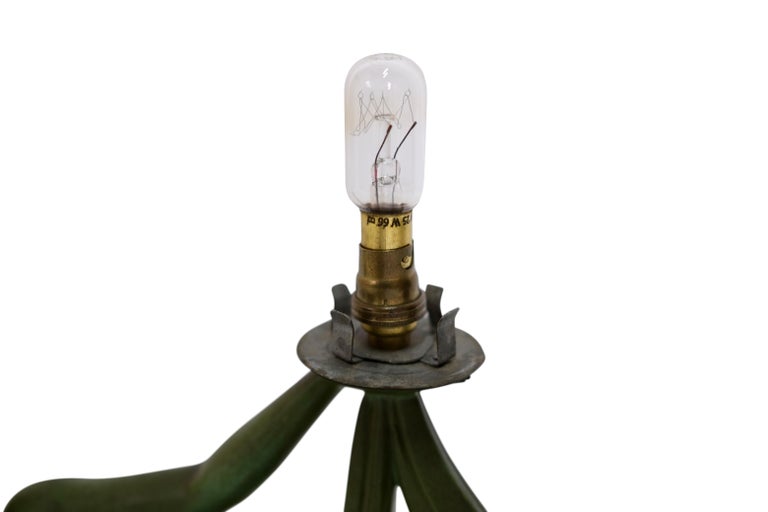
Electrical condition: Electrified
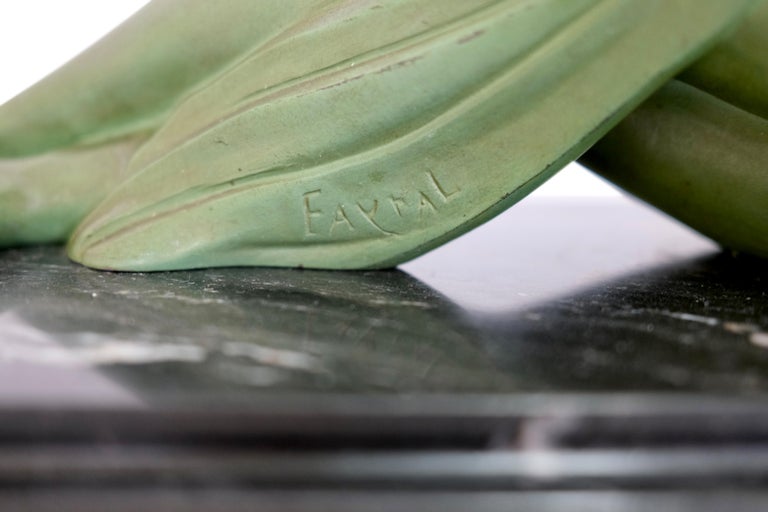
Signature: “Fayral”
Height: 30 cm | Width: 53 cm | Depth: 16 cm
Art Deco Sculpture “Aube” by Pierre Le Faguays – Signed Fayral
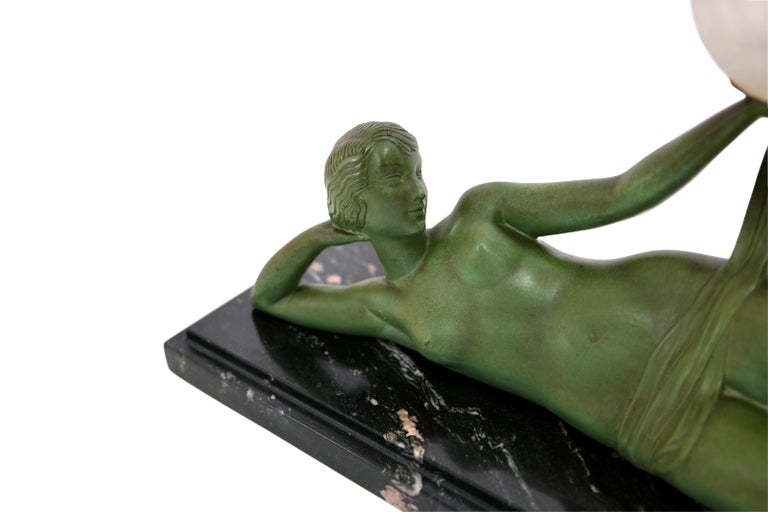
This elegant Art Deco sculpture “Aube” is an expressive example of French sculptural art from the 1930s. The design is attributed to Pierre Le Faguays (1892–1962), a prominent sculptor of the French Art Deco period. The sculpture bears the signature “Fayral”, one of his well-known artistic pseudonyms.
The title “Aube” means “dawn” in French. It refers to the beginning of a new day and the symbolic power of emerging light. This poetic theme perfectly complements the elegant and idealised design language of Art Deco.
The sculpture is made of patinated white metal, known in the French art trade as régule. A marble base completes the composition and gives the piece a distinguished appearance.
Pierre Le Faguays and French Art Deco Sculpture
Pierre Le Faguays is among the recognised French sculptors of the Art Deco period. His work combines classical ideals of beauty with the modern artistic language of the 1920s and 1930s.
Harmonious proportions, stylised movements and elegant lines are particularly characteristic of his figures. He frequently explored female subjects, allegorical themes and the beauty of the human form.
In doing so, he succeeded in interpreting classical motifs in a modern way. His sculptures reflect the spirit of optimism and artistic renewal of the period. During these years, art, fashion and architecture developed exciting new forms of expression.
Alongside his own name, Le Faguays used several artistic pseudonyms. One of these was Fayral, the signature found on the sculpture “Aube”.
Fayral and Max Le Verrier – French Sculptural Art of the 1930s
The French sculptor and art founder Max Le Verrier (1891–1973) played an important role in the production of Le Faguays’ sculptures.
Le Verrier operated a renowned art foundry in Paris. Numerous decorative sculptures and artistic objects in the French Art Deco style were produced there.
Pierre Le Faguays and Max Le Verrier maintained a close artistic collaboration. Many designs by Le Faguays were manufactured in his colleague’s foundry.
The sculpture “Aube” is also associated with this collaboration. Pierre Le Faguays created the design, while Max Le Verrier is named as its manufacturer.
This connection between two important representatives of French decorative arts makes the object particularly interesting from an art historical perspective.
Original Patina, Régule and Marble Base
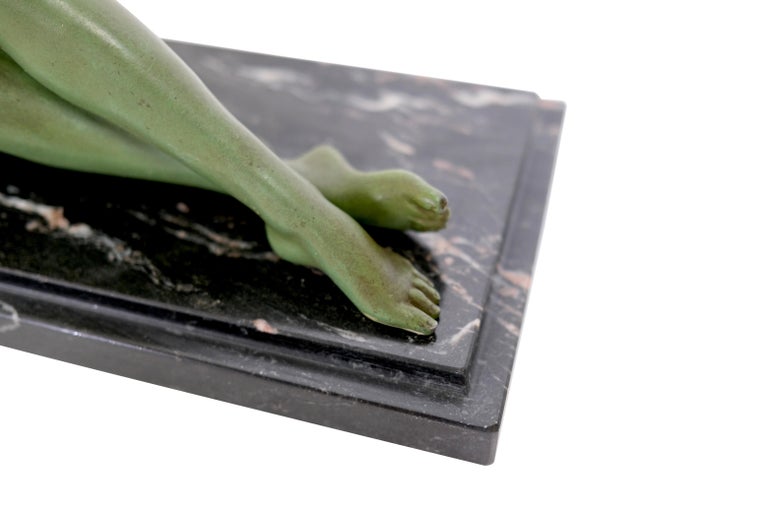
The Art Deco sculpture by Fayral retains its original patina. This gives the surface its characteristic appearance and emphasises the historical character of the artwork.
The material used is known as régule. It is a castable white metal alloy frequently used in France for decorative sculptures.
This material allowed artists and craftsmen to reproduce finely detailed forms. It was especially popular in French decorative arts during the first half of the 20th century.
The marble base creates an attractive contrast with the patinated metal surface. At the same time, it enhances the sculptural presence of the object.
The sculpture is electrified and bears the signature “Fayral”.
“Aube” – A French Art Deco Work of Art
French Art Deco developed into an internationally influential artistic movement during the 1920s. The Parisian art scene played a particularly important role in shaping its development.
Alongside furniture, lighting and decorative objects, artists created numerous sculptures featuring allegorical and mythological motifs.
They combined traditional sculptural techniques with a modern aesthetic. Flowing lines, stylised forms and expressive compositions became defining characteristics of the movement.
The sculpture “Aube” belongs to this artistic tradition. Its poetic title and elegant design embody the connection between art, symbolism and decorative refinement.
As an original French Art Deco object from the 1930s, it makes an attractive addition to sophisticated collections and elegant interiors.
Another remarkable example of decorative lighting is this Art Deco ceiling lamp by Degué.
Art Deco at RSA Wiesbaden
Discover more exceptional Art Deco furniture and decorative objects in our owner-operated antiques gallery in Wiesbaden. Our collection includes Art Deco dining tables, Art Deco mirrors and Art Deco cabinets.
We specialise in original Art Deco furniture and decorative arts. Furthermore, an elegant occasional table can become a distinctive centrepiece in any living space.
